Autonomous Vehicles in 2026: Where We Actually Stand (It’s Complicated)
Self-driving vehicles have been “almost here” for so long that the phrase has become a punchline. But 2026 is shaping up differently — not because autonomous vehicles have suddenly achieved the science-fiction vision of a car that drives itself everywhere in all conditions, but because the industry has matured enough to understand what works, what doesn’t, and where the actual money is being made. The picture is more nuanced and more commercially real than either optimists or skeptics predicted five years ago.
Waymo’s Quiet Dominance
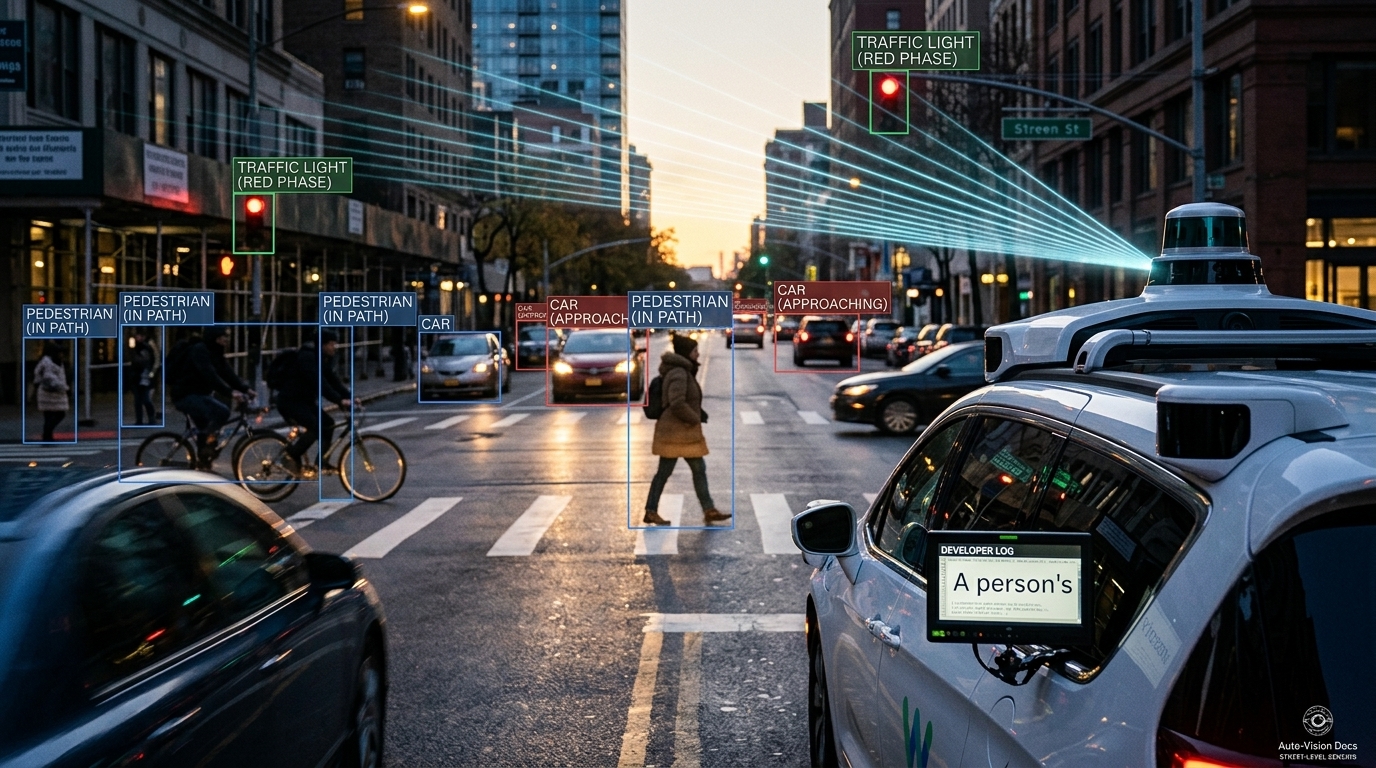
While Tesla grabs headlines, Waymo — Alphabet’s autonomous vehicle division — has quietly built the only commercially operational robotaxi service at meaningful scale. Waymo One operates paid, fully driverless rides (no safety driver behind the wheel) in Phoenix, San Francisco, Los Angeles, and Austin, completing over 150,000 paid rides per week across these cities. The service has also expanded to test operations in Miami, Atlanta, and several cities in Japan through a partnership with Nihon Kotsu, Tokyo’s largest taxi company.
Waymo’s approach prioritizes thoroughness over speed. Each city launch involves months of detailed mapping, thousands of hours of supervised driving to catalog local driving patterns and edge cases, and a gradual expansion from limited geofenced areas to broader coverage. The result is a service with a safety record that’s genuinely impressive: Waymo published data showing their vehicles are involved in 85% fewer injury-causing crashes per million miles than human-driven vehicles, and zero fatalities across their entire operational history of over 30 million autonomous miles driven.
The user experience has reached the point where regular riders treat it as a normal transportation option rather than a novelty. Waymo One processes pickups and drop-offs through a standard ride-hailing app interface. Wait times average 3-7 minutes in core service areas. Pricing is comparable to Uber and Lyft. User satisfaction scores average 4.8/5.0. The main complaints are geographic limitations (the service only works within mapped areas) and occasional overly cautious driving behavior that adds a minute or two to some trips.
Tesla’s FSD: Progress and Persistent Questions
Tesla’s Full Self-Driving (FSD) remains the most controversial product in the autonomous vehicle space. Version 13, rolled out in early 2026, represents a significant improvement over earlier versions — the system handles highway driving, urban intersections, roundabouts, and parking with notably fewer interventions than version 12. Tesla reports that FSD v13 vehicles average one human intervention per 750 miles, up from one per 100 miles just two years ago.
However, Tesla’s approach differs fundamentally from Waymo’s in ways that matter for safety. Tesla uses a vision-only sensor suite (cameras without lidar or radar) and relies on AI neural networks trained on data from millions of customer vehicles. This approach is cheaper per vehicle and allows rapid improvement through over-the-air updates, but it lacks the redundant sensor systems that Waymo and other developers use as safety nets. In degraded conditions — heavy rain, direct sun glare, construction zones with confusing signage — the vision-only system can struggle in ways that a lidar-equipped vehicle handles more reliably.
The regulatory picture for Tesla FSD is complex. The NHTSA has opened multiple investigations into FSD-involved crashes, though no recall has resulted from these investigations specifically. California and several other states require manufacturers to report all crashes involving autonomous driving systems, and Tesla’s crash rate per mile — while difficult to compare directly with human driving due to differences in operating conditions — remains a subject of active debate among safety researchers. Tesla’s claim that FSD is “safer than human driving” is supported by some interpretations of their data but challenged by researchers who argue the comparison doesn’t account for the favorable conditions (good weather, well-maintained roads, newer vehicles) under which most FSD miles are driven.
Autonomous Trucking: The Stealth Revolution
The autonomous vehicle sector generating the most immediate economic value isn’t passenger cars — it’s long-haul trucking. Companies including Aurora Innovation, Kodiak Robotics, and TuSimple (reorganized and renamed after its 2024 controversies) are operating autonomous trucks on defined highway routes, primarily in the Sun Belt states where weather conditions are most predictable.
Aurora’s partnership with Fedex and Werner Enterprises has been running commercial autonomous freight on the I-45 corridor between Dallas and Houston since late 2025, with loads worth real money for real customers. These aren’t demonstration runs — they’re integrated into logistics networks alongside human-driven trucks, taking loads when available and handing off at designated transfer hubs near the destination city where human drivers handle the “last mile” urban delivery.
The business case for autonomous trucking is compelling because it addresses a genuine crisis: the US trucking industry has a shortage of 80,000 drivers that’s projected to reach 160,000 by 2030. Long-haul routes are particularly difficult to staff because they require drivers to spend days away from home. An autonomous truck doesn’t need rest breaks (driving hours regulations don’t apply to driverless vehicles), can operate 20+ hours per day versus 11 for a human driver, and costs roughly $0.40 per mile in operating costs compared to $0.85 per mile for a human-driven truck including driver compensation.
The highway driving environment is also more tractable than urban driving. Highways have consistent lane markings, predictable traffic patterns, no pedestrians, no cyclists, and limited intersection complexity. The sensor and AI requirements for reliable highway autonomy are substantially lower than for urban environments, which is why autonomous trucking has reached commercial viability while fully autonomous urban taxis remain limited to a few companies in a few cities.
China’s Parallel Universe
China’s autonomous vehicle industry operates at a scale and pace that’s largely invisible to Western audiences. Baidu’s Apollo Go robotaxi service operates in 11 Chinese cities, with Wuhan serving as the largest deployment — over 400 fully driverless vehicles operating across a 3,000 square kilometer service area, completing 30,000+ rides per day. Pony.ai, WeRide, and AutoX also operate commercial robotaxi services in multiple Chinese cities.
Chinese regulatory approval has moved faster than in the US and Europe, with several major cities granting permits for fully driverless commercial operation without geographic restrictions within city limits. This regulatory approach — faster approval with local oversight — has allowed Chinese companies to accumulate real-world driving data and operational experience at a pace that exceeds their Western counterparts.
The technology approach also differs. Chinese autonomous vehicles typically use a full sensor suite (cameras, lidar, radar, ultrasonic) with redundant compute systems, and they benefit from Vehicle-to-Everything (V2X) infrastructure being installed in Chinese cities — smart traffic signals and road-side units that communicate with autonomous vehicles, providing information beyond what on-board sensors can detect (e.g., a pedestrian hidden behind a parked truck that the traffic signal can see but the vehicle can’t).
Regulation Catches Up — Unevenly
The regulatory landscape for autonomous vehicles in 2026 is a patchwork that reflects different countries’ and states’ risk tolerance. In the US, federal legislation remains stalled — Congress has repeatedly failed to pass comprehensive autonomous vehicle regulation, leaving a state-by-state approach where California, Arizona, Texas, and Florida have permissive frameworks while other states have minimal or restrictive rules.
The European Union’s General Safety Regulation requires new vehicle types to include Advanced Driver Assistance Systems (ADAS) but stops short of approving fully autonomous driving for consumer vehicles. The UN’s WP.29 working group has established international technical standards for Level 3 (conditional automation) that allow hands-off highway driving up to 130 km/h, which Mercedes-Benz, BMW, and Volvo have implemented in their latest models — making them the first consumer cars where the manufacturer, not the driver, is legally responsible during automated driving segments.
This regulatory fragmentation creates strategic challenges for manufacturers. A vehicle that can drive itself in Arizona may not be legal in New York. A robotaxi service permitted in San Francisco makes no guarantees about neighboring Oakland. Companies must navigate dozens of different regulatory frameworks simultaneously, which advantages well-resourced players like Waymo and Baidu while creating barriers for smaller entrants.
The Realistic Timeline
The honest answer to “when will I be able to buy a fully self-driving car?” remains: it depends on what you mean by “fully.” Level 3 highway automation (hands-off, eyes-off in certain conditions) is available today from Mercedes-Benz, BMW, and several Chinese manufacturers. Level 4 robotaxi services (fully driverless within geofenced areas) are operational from Waymo and several Chinese companies. Level 5 automation (fully autonomous in all conditions, anywhere) remains a research goal with no credible commercial timeline.
The most probable near-term trajectory is expansion of what works: more cities for robotaxi services, more highway routes for autonomous trucks, and gradual extension of Level 3 consumer features to more road types and weather conditions. The universal self-driving car that handles any road, any weather, any situation — the vision that captured the public imagination in 2015 — is no longer the industry’s primary target. Instead, the focus is on commercially viable, safety-validated autonomous systems for specific, well-defined use cases. It’s less dramatic, more incremental, and far more likely to succeed.
Related articles: Fintech Super Apps Dominate Emerging Mar | Neuromorphic Computing: Brain-Inspired C | 3D Bioprinting in 2026: From Lab Curiosi