Fintech Super Apps Dominate Emerging Markets — And They’re Coming for the West Next
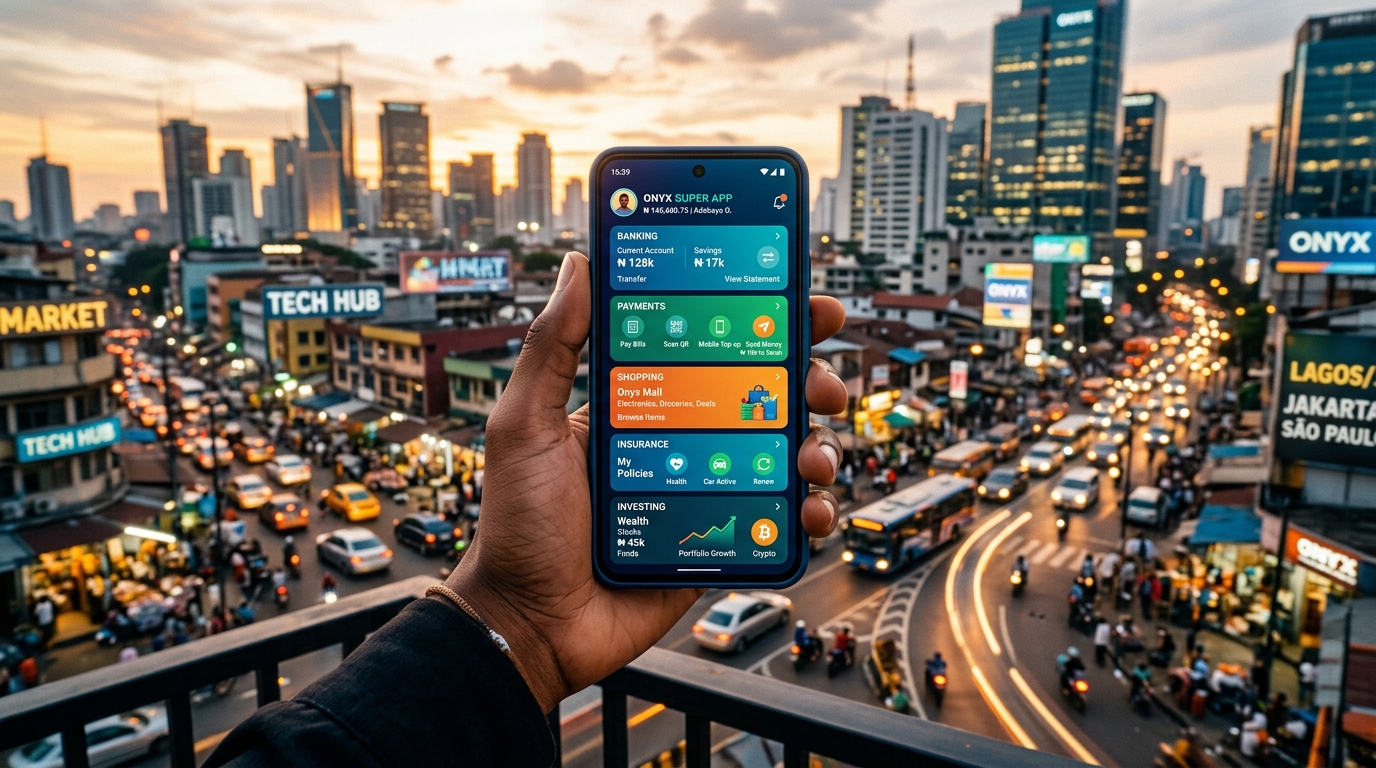
Fintech super apps — platforms that combine banking, payments, lending, insurance, investing, and lifestyle services into a single application — have become the dominant financial technology model across Southeast Asia, Latin America, Africa, and increasingly in mature markets where traditional banking infrastructure is being outflanked by integrated digital platforms. The super app model, pioneered by China’s WeChat and Alipay and adapted globally, represents the most significant restructuring of retail financial services since the ATM.
The Super App Model Explained
A financial super app provides a unified platform for multiple financial and non-financial services, connected through a single user identity, a single balance (or wallet), and a single interface. The core proposition is that every financial interaction — paying for groceries, sending money to family, paying utility bills, buying insurance, investing savings, getting a loan — happens in one app rather than requiring separate banking apps, payment apps, investment apps, and insurance apps.
The model works by starting with a high-frequency service that brings users to the platform daily (typically payments or messaging), then layering additional financial services on top. Once a user has a digital wallet they use for daily payments, the platform can offer savings accounts (storing the money already in the wallet), micro-loans (based on transaction history that demonstrates creditworthiness), insurance (offered at the point of relevant transactions), and investment products (for funds that accumulate in the wallet). Each additional service increases user engagement and time-in-app, creates cross-selling opportunities, and builds a data advantage that makes the platform’s credit scoring, fraud detection, and personalization more accurate.
The data flywheel is the super app’s most powerful structural advantage. A platform that sees a user’s payment transactions, earning patterns, bill payment behavior, social connections, and investment activity has a more comprehensive financial picture than any traditional bank or credit bureau. This data enables more accurate credit scoring (particularly for users without traditional credit histories), personalized product recommendations, real-time fraud detection, and risk-adjusted pricing that can undercut traditional financial products.
The Emerging Market Leaders
Southeast Asia has produced some of the world’s most ambitious fintech super apps. Grab (headquartered in Singapore, operating across 8 Southeast Asian countries) evolved from a ride-hailing app to a financial services platform offering payments (GrabPay), lending, insurance, and investment products alongside its transportation and food delivery services. Grab Financial Group processes billions of dollars in transactions annually and serves as the primary financial interface for millions of users who are underbanked or unbanked by traditional financial institutions.
Gojek (Indonesia), GoTo’s consumer platform, followed a similar trajectory — from motorcycle ride-hailing to a comprehensive super app offering payments (GoPay), lending, insurance, investment, and a marketplace for services ranging from cleaning to massage to home repair. In Indonesia, where 66% of adults lacked bank accounts in 2017, GoPay and similar digital wallets have been transformative in expanding financial inclusion, with digital wallet penetration reaching 70% of urban adults by 2025.
In Latin America, Mercado Pago (Mercado Libre’s fintech arm) has become the region’s largest digital payment and financial services platform. Starting as a payment processor for Mercado Libre’s e-commerce marketplace, Mercado Pago expanded to offer digital wallets, credit and debit cards, consumer and merchant lending, insurance, and investment products. The platform processes over $150 billion in total payment volume annually and serves over 50 million active users across 18 Latin American countries. Nubank, the Brazilian digital bank, has grown to over 100 million customers across Brazil, Mexico, and Colombia, providing a banking super app experience with credit cards, personal accounts, lending, insurance, and investments.
In Africa, M-Pesa (operated by Safaricom in Kenya and expanded across 7 African countries) remains the prototype of mobile-first financial inclusion. Originally a simple mobile money transfer service, M-Pesa now offers savings products (M-Shwari), micro-loans (Fuliza), merchant payments, and international remittances. Over 50 million active users depend on M-Pesa for daily financial transactions, and in Kenya, M-Pesa processes transactions equivalent to approximately 50% of GDP. Newer competitors including Flutterwave, Chipper Cash, and OPay are building broader super app platforms for the African market.
Western Market Dynamics
In developed markets with established banking infrastructure, the super app model faces different dynamics. Traditional banks, payment networks (Visa, Mastercard), and established fintech companies (PayPal, Square/Block, Revolut, Wise) provide services that consumers already use and trust. The unbanked population is small (less than 5% in most Western countries), so the financial inclusion driver that propels super apps in emerging markets is largely absent.
Despite these headwinds, super app ambitions are visible in Western markets. Block (formerly Square) has built the Cash App into a platform offering peer-to-peer payments, direct deposit, a debit card, Bitcoin trading, stock investing, tax filing, and small business lending — approaching super app breadth within a payments-first platform. PayPal’s integration of Venmo, PayPal Credit, cryptocurrency trading, savings yields, and buy-now-pay-later (BNPL) reflects a super app strategy. Revolut (UK-based, operating globally) explicitly pursues a super app vision with banking, trading, cryptocurrency, travel insurance, lounge access, and mobile phone plans in a single app.
Apple’s entry into financial services — Apple Pay, Apple Card, Apple Savings, and the recently expanded Apple Pay Later — could represent the most significant Western super app play. Apple’s integrated hardware-software ecosystem (1.8 billion active devices), pre-existing payment infrastructure (Apple Pay is accepted at 90%+ of US retail), and trusted brand position give it distribution and trust advantages that standalone fintech companies struggle to match. Apple’s strategy appears to be gradual expansion from payments into broader financial services, leveraging its device ecosystem as the distribution channel.
Financial Inclusion Impact
The most significant socioeconomic impact of fintech super apps is financial inclusion — bringing banking, credit, and insurance services to populations that traditional financial institutions don’t serve. The World Bank estimates that 1.4 billion adults globally remain unbanked (without any formal financial account), concentrated in developing countries where banking infrastructure is sparse, account fees are high relative to incomes, and documentation requirements exclude people without formal employment or fixed addresses.
Digital wallets and super apps bypass these barriers. A smartphone (increasingly affordable, with sub-$50 devices available in most markets) and a phone number are sufficient to open a digital wallet, with KYC (know your customer) requirements often met through national ID systems or verified phone numbers. The cost of operating a digital account is a fraction of a traditional bank account (no branches, no ATMs, automated customer service), enabling profitability at revenue levels that traditional banks would consider too small to serve.
Micro-lending through super apps has provided credit access to millions of small business owners and individuals who would never qualify for traditional bank loans. By using transaction data (payment volumes, frequency, customer diversity) as a credit scoring input rather than relying on traditional credit bureau data, super apps can assess the creditworthiness of informal economy participants — market vendors, gig workers, small farmers — whose economic activity is invisible to the formal financial system. GrabFinance, Mercado Credito, and M-Shwari have collectively disbursed billions in micro-loans with default rates comparable to traditional lending, demonstrating that alternative data-based credit scoring works.
Micro-insurance, offered through super apps at the point of relevant transactions, provides insurance access to populations that have historically been uninsured. Travel insurance offered when booking a ride, device insurance offered when buying a phone, health insurance offered when making a pharmacy purchase — these contextual offerings convert the insurance purchase decision from a proactive (and often neglected) planning activity to a frictionless addition to an existing transaction. The premium amounts are small (often under $1 per transaction), making insurance accessible to low-income consumers.
Regulatory Challenges
Fintech super apps challenge regulatory frameworks designed for specialized financial institutions. A traditional bank is regulated by banking authorities. An insurance company is regulated by insurance authorities. A securities firm is regulated by securities authorities. A super app that offers banking, insurance, lending, and investment services crosses all of these regulatory boundaries, creating jurisdictional complexity and potential regulatory gaps.
Data concentration is the most prominent regulatory concern. A super app that collects payment history, location data, social connections, communication patterns, and financial behavior for hundreds of millions of users holds a dataset of extraordinary scope and sensitivity. China’s regulatory crackdown on Ant Group (Alipay’s parent company) — which halted Ant’s $37 billion IPO and forced a corporate restructuring — was motivated in significant part by concerns about data concentration, systemic financial risk from interconnected lending products, and competitive advantages that made it difficult for regulated banks to compete.
India’s regulatory approach has been to build public digital infrastructure rather than ceding financial platform control to private super apps. The India Stack — comprising Aadhaar (digital identity), UPI (interoperable instant payments), and Account Aggregator (consent-based data sharing) — provides the technical foundation for financial services while ensuring that no single private company controls the platform. UPI processes over 10 billion transactions per month across dozens of participating apps (Google Pay, PhonePe, Paytm), creating a competitive market rather than a winner-take-all super app dynamic.
The EU’s Digital Markets Act (DMA) and the Payment Services Directive 3 (PSD3) establish the regulatory framework for financial platforms in Europe, requiring interoperability, data portability, and fair competition rules that would constrain super app monopoly tendencies. Open Banking regulations (mandating that banks share customer data with authorized third parties) level the playing field between established banks and fintech challengers, though they also provide data access to potential super app platforms.
The Competitive Endgame
The fintech super app model is inherently winner-take-most within each market because network effects, data advantages, and user switching costs compound over time. Once a user has their salary deposited, bills automated, credit history built, and investments managed through a single platform, switching to a competitor means migrating all of these relationships — a high-friction process that most users avoid.
This winner-take-most dynamic is precisely what regulators in multiple jurisdictions are trying to prevent. The tension between the genuine benefits of integrated financial platforms (convenience, inclusion, efficiency) and the risks of concentrated market power (reduced competition, data monopoly, systemic financial risk) will define fintech regulation for the next decade. The most likely outcome is a regulated ecosystem where super apps provide the consumer interface but operate on interoperable rails (open banking APIs, instant payment systems, portable digital identity) that prevent any single platform from achieving the lock-in that would eliminate competition.