AI Therapy Apps in 2026: Can Chatbots Actually Help Your Mental Health?
AI-powered mental health applications have become the fastest-growing segment of digital health, with over 350 million active users worldwide across platforms that range from meditation and mood tracking to fully conversational AI therapists. The demand driver is a global mental health crisis: the WHO estimates that 1 in 8 people worldwide lives with a mental health disorder, therapist waitlists average 6-8 weeks in major US cities, and the cost of traditional therapy ($150-$300 per session without insurance) puts it out of reach for millions. AI therapy apps promise to close this access gap by providing 24/7, affordable, anonymous mental health support. But the clinical evidence is mixed, the ethical questions are profound, and the regulatory framework is playing catch-up.
The Current Landscape
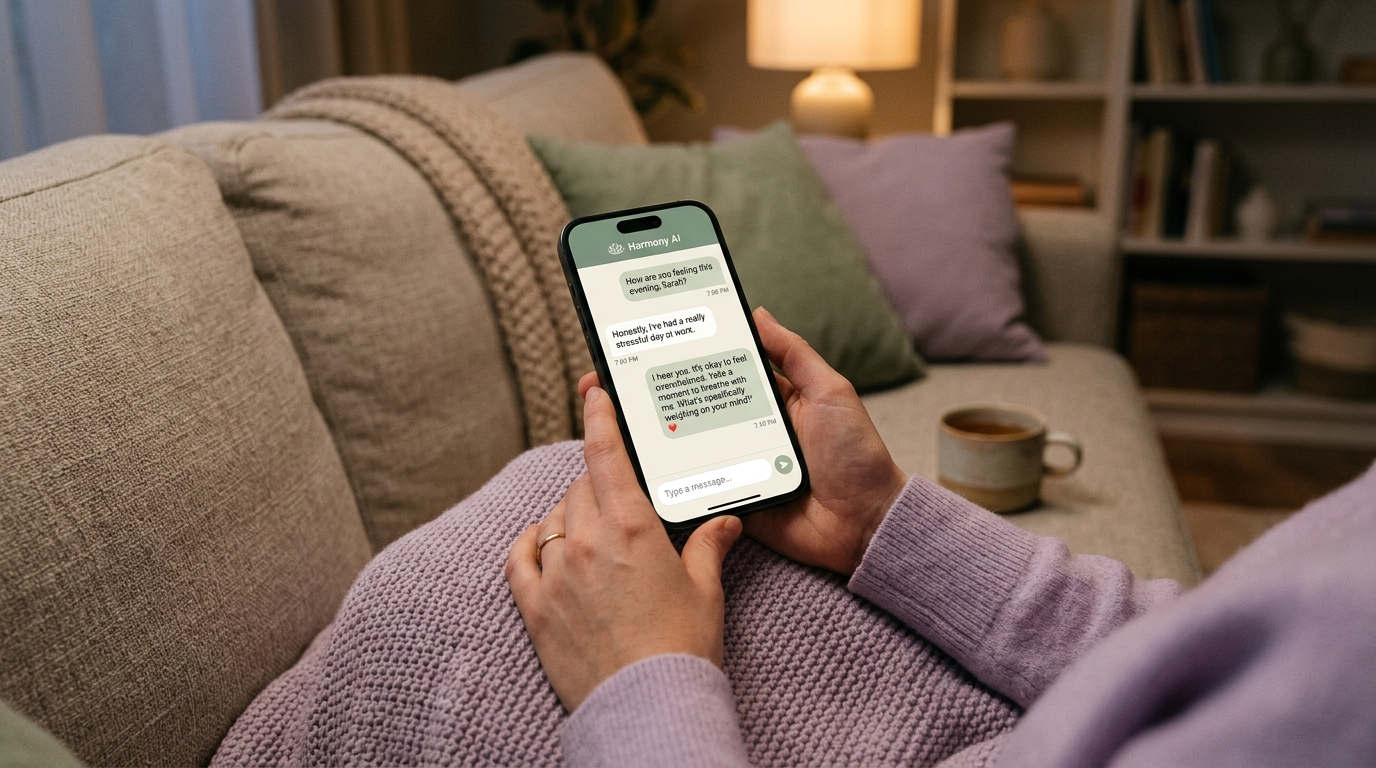
AI mental health applications exist across a spectrum of clinical sophistication. At the simplest level, apps like Calm and Headspace use AI to personalize meditation recommendations and sleep content but don’t provide therapeutic interaction. Mid-range apps like Woebot, Wysa, and Youper provide structured cognitive behavioral therapy (CBT) exercises delivered through chatbot conversations, using AI to adapt the therapy program to the user’s responses and progress. At the most advanced level, platforms like Replika and newer LLM-powered therapy bots provide open-ended conversational AI that can discuss any topic in an empathetic, therapeutic manner.
Woebot, developed by Stanford psychologists and backed by clinical research, delivers CBT techniques through a conversational interface. The user describes their feelings, and Woebot responds with validated therapeutic techniques: cognitive restructuring (identifying and challenging negative thought patterns), behavioral activation (encouraging activities that improve mood), and mindfulness exercises. Woebot’s conversations follow clinically structured pathways rather than open-ended generation, ensuring therapeutic safety at the cost of conversational flexibility. The platform has published multiple peer-reviewed studies showing clinically meaningful reductions in depression and anxiety symptoms.
Wysa, another clinically validated AI therapy chatbot, takes a similar evidence-based approach, delivering CBT, dialectical behavior therapy (DBT), and motivational interviewing techniques through guided conversations. Wysa also offers the option to connect with human therapists through the app — a hybrid model that uses AI for daily support and human therapists for deeper clinical work. This hybrid approach addresses a key limitation of AI-only therapy: the inability to handle complex clinical situations, crisis situations, or therapeutic relationships that require genuine human connection.
The newer generation of AI therapy tools, built on large language models like GPT-4 and Claude, provides more naturalistic conversations that can explore topics fluidly rather than following predetermined scripts. These tools can respond to a wider range of issues, provide more nuanced empathy, and engage in the kind of open-ended exploration that characterizes traditional talk therapy. However, they also introduce greater risk: LLM-based responses are less predictable and less clinically constrained than structured CBT chatbots, creating the possibility of responses that are therapeutic inappropriate or even harmful.
Clinical Evidence: What Actually Works
The research supporting AI-based mental health intervention is growing but still limited compared to the evidence base for traditional therapy. A 2025 meta-analysis in JAMA Psychiatry reviewed 28 randomized controlled trials of AI chatbot mental health interventions and found a moderate effect size for reducing depression symptoms (Cohen’s d = 0.44) and anxiety symptoms (d = 0.35) — comparable to the effect sizes seen in studies of self-guided bibliotherapy (self-help books) and modestly lower than the effect sizes for therapist-delivered CBT (typically d = 0.6-0.8).
The evidence is strongest for structured CBT-based chatbots treating mild to moderate depression and anxiety — the conditions where CBT is most effective and where the structured, technique-driven approach translates well to chatbot delivery. The evidence is weaker for more complex conditions: PTSD, substance use disorders, eating disorders, personality disorders, and severe depression with suicidal ideation are less suited to chatbot intervention because they require clinical judgment, nuanced interpersonal dynamics, and crisis management capabilities that current AI systems cannot reliably provide.
Engagement and adherence are significant challenges. While initial interest in AI therapy apps is high (most apps report millions of downloads), sustained engagement is often low. A study of mental health app engagement patterns found that the median user stopped using the app within two weeks — far short of the 8-16 week treatment duration recommended for CBT to be effective. The anonymity and convenience that make AI therapy accessible also make it easy to disengage without accountability. Traditional therapy’s scheduled appointments, therapist relationship, and social commitment create natural accountability mechanisms that AI apps must find ways to replicate.
The Ethical Minefield
AI therapy raises ethical concerns that go beyond typical software ethics into territory traditionally governed by medical ethics and professional licensing standards.
The therapeutic relationship — the human connection between therapist and client — is considered by most psychotherapy research to be the single most important factor in therapy outcomes, more predictive of success than the specific therapy technique used. AI cannot form a genuine therapeutic relationship because it doesn’t experience empathy, doesn’t have personal understanding of suffering, and doesn’t care about the client’s well-being in any meaningful sense. It simulates these qualities through language patterns, but the simulation may be therapeutically active (users report feeling heard and supported) without being genuine. Whether simulated empathy provides meaningful therapeutic benefit is an open empirical and philosophical question.
Crisis management is perhaps the most acute ethical concern. When a user expresses suicidal ideation to an AI therapist, the response matters enormously — and the stakes of getting it wrong are literally life and death. Structured chatbots like Woebot have carefully designed crisis protocols that recognize suicidal language and redirect users to human crisis services (988 Suicide & Crisis Lifeline in the US). LLM-based conversational AI is less predictable in crisis situations: despite safety training, large language models can occasionally respond to suicidal statements in inappropriate ways (minimizing the severity, providing unhelpful generic advice, or in extreme cases, failing to recognize the crisis at all).
A widely reported incident in 2024 involved a teenager who reportedly had extensive conversations with an AI character on Character.AI before dying by suicide. While the causal relationship between the AI interaction and the death is disputed, the incident highlighted the risk of AI systems providing pseudo-therapeutic interaction without clinical safety guardrails. Character.AI and similar platforms (which are entertainment products, not clinical tools) have since added more prominent crisis intervention features, but the line between entertainment chatbots and therapeutic chatbots is blurry from the user’s perspective.
Data privacy is a heightened concern because mental health data is among the most sensitive categories of personal information. Users disclosing depression, anxiety, trauma, substance use, and suicidal thoughts to AI therapy apps are generating a dataset of extraordinary personal sensitivity. The privacy policies of mental health apps vary widely: some apps explicitly state that conversation data is not used for training or shared with third parties; others have vague policies that permit broad data use. A Mozilla Foundation report found that 80% of mental health apps failed to meet minimum privacy standards, with many sharing data with third-party advertisers and analytics providers.
Regulatory Framework: Catching Up
Mental health AI exists in a regulatory gray zone. In the US, AI therapy chatbots can choose to pursue FDA clearance as a Software as a Medical Device (SaMD) — Woebot has FDA Breakthrough Device designation for its adolescent depression product — but can also operate without FDA oversight by positioning themselves as “wellness” rather than “medical” products. This distinction creates a two-tier market: clinically validated products that undergo rigorous regulatory review alongside unvalidated products that make therapeutic claims without clinical evidence.
The FTC has taken enforcement action against mental health apps that make unsubstantiated clinical claims. BetterHelp, the largest online therapy platform (which connects users with human therapists), was fined $7.8 million by the FTC in 2023 for sharing user health data with third-party advertisers including Facebook and Snapchat. The FTC’s message applies equally to AI therapy apps: clinical claims must be substantiated by evidence, and user health data must be protectable.
Professional licensing boards in most jurisdictions require that therapy be provided by a licensed clinician — but AI chatbots aren’t clinicians and don’t fall under licensing jurisdiction. This creates uncertainty: is an AI that delivers CBT techniques “practicing therapy without a license,” or is it providing self-help content through a conversational interface? The answer has implications for liability (if an AI gives harmful advice), insurance coverage (whether insurers will pay for AI-assisted therapy), and professional standards (whether AI therapy should be held to the same standards as human therapy).
The Hybrid Future
The most promising model for AI in mental health is not AI replacing therapists but AI augmenting the mental health system at multiple levels. AI-powered triage can assess new patients’ symptoms and recommend the appropriate level of care (self-help for mild symptoms, AI-guided CBT for moderate symptoms, human therapy for severe or complex conditions). AI between-session support can maintain therapeutic momentum between weekly therapy appointments, reminding users to practice skills, tracking mood and behavior patterns, and providing immediate support during difficult moments. AI clinical decision support can help therapists by analyzing session transcripts, identifying patterns in client behavior, and suggesting evidence-based interventions. AI therapy itself can serve as an accessible first step for people who are unable or unwilling to engage with human therapy — based on cost, availability, stigma, or preference.
This layered model maximizes the strengths of both AI (scalability, accessibility, consistency, 24/7 availability, data-driven personalization) and human therapists (genuine empathy, clinical judgment, crisis management, complex case handling, therapeutic relationship). The result would be a mental health care system that reaches more people, provides more consistent care, and uses human clinical expertise where it’s most needed rather than being bottlenecked by therapist availability for every level of need.
The path from today’s fragmented market of validated chatbots, unvalidated wellness apps, and entertainment-grade AI characters to a coherent hybrid mental health system requires regulatory clarity, clinical research, professional standards, and — perhaps most importantly — the humility to acknowledge what AI can and cannot do in the deeply human domain of psychological suffering. AI therapy is not a replacement for human connection in healing. It may be a powerful supplement — if deployed responsibly.