The Subscription Fatigue Crisis: Why Consumers Are Canceling Everything and What’s Next
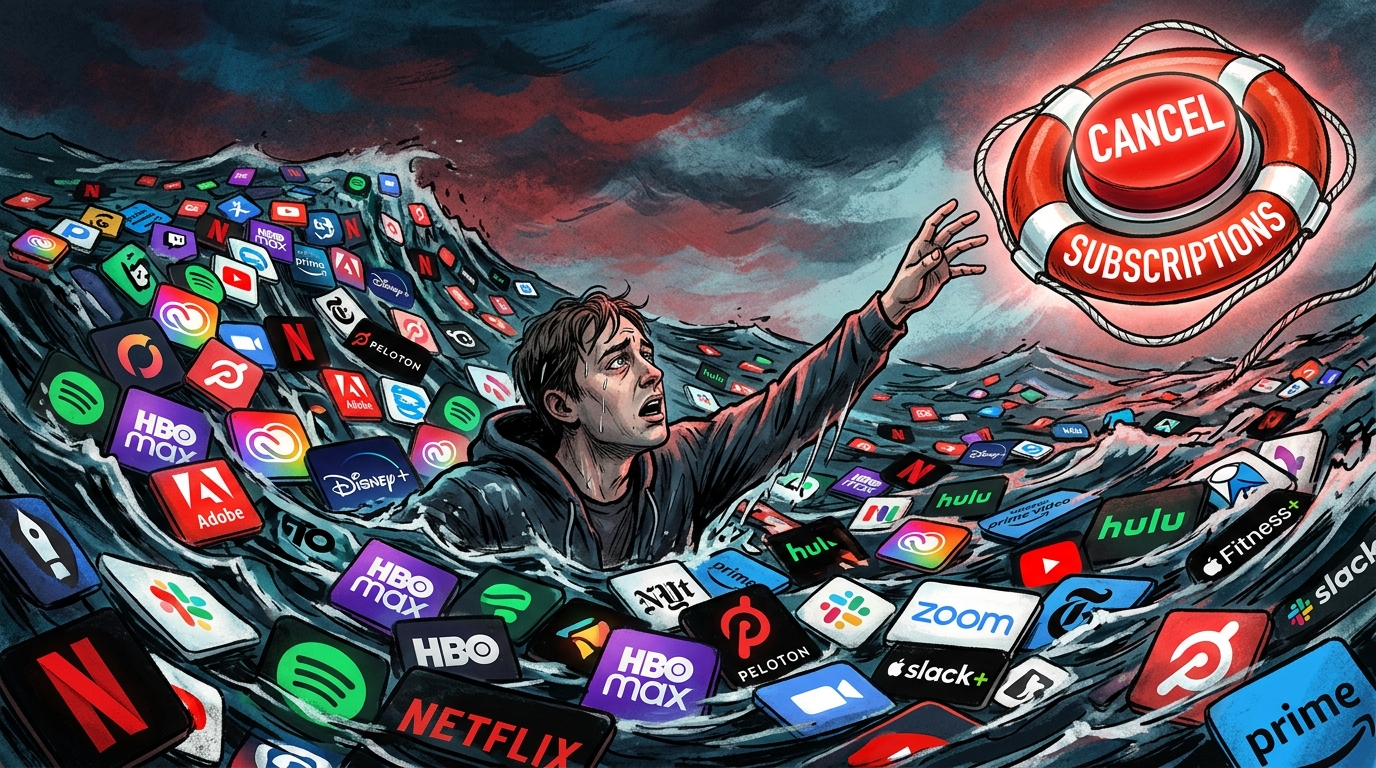
The average American household now spends $273 per month on subscriptions — streaming services, software, cloud storage, news, fitness apps, meal kits, gaming, music, and dozens of other recurring charges that individually seem modest but collectively represent a significant financial commitment. The subscription economy that promised convenient, affordable access to everything has evolved into a sprawling landscape of recurring payments that many consumers are struggling to track, justify, and afford. The result is a consumer backlash known as subscription fatigue, and it’s forcing companies across every industry to rethink their business models.
How We Got Here
The subscription revolution began with a genuine value proposition. Netflix at $9.99/month replaced $15/month cable packages with on-demand streaming. Spotify at $9.99/month replaced $15+ music downloads with unlimited streaming. Adobe Creative Cloud at $52.99/month replaced $2,500 software purchases with always-updated access. These early subscriptions were individually compelling — lower upfront cost, more flexibility, continuous updates, and the psychological appeal of paying a small amount monthly rather than a large amount upfront.
The success of these pioneering subscriptions triggered a cascade of “subscription-ification” across every consumer category. Software migrated from perpetual licenses to subscriptions (Microsoft Office 365, AutoCAD, Figma). Hardware added subscriptions (BMW subscription seat heating sparked outrage despite being reversed; Tesla premium connectivity; HP Instant Ink). Services that were previously included became premium tiers (YouTube Premium, LinkedIn Premium, X Premium). Physical products became subscriptions (Dollar Shave Club, HelloFresh, Stitch Fix). Even apps that were previously one-time purchases migrated to subscriptions, often with higher long-term costs than the original purchase price.
The streaming video market exemplifies the accumulation problem. In 2015, a Netflix subscription covered most popular content. By 2026, the streaming landscape includes Netflix ($15.49-$22.99), Disney+ ($7.99-$13.99), Hulu ($7.99-$17.99), Max ($9.99-$15.99), Amazon Prime Video ($8.99), Peacock ($5.99-$11.99), Paramount+ ($5.99-$11.99), Apple TV+ ($9.99), and a half-dozen niche services. Subscribing to all major services costs $80-$140/month — more than the cable packages streaming was supposed to replace. The cord-cutting revolution has been replaced by a bundling revolution in reverse, where consumers must assemble their own entertainment package from a dozen competing services.
The Psychology of Subscription Accumulation
Subscription fatigue isn’t just about total cost — it’s about the psychological dynamics that lead consumers to accumulate more subscriptions than they actively use or can track. Several cognitive biases work in favor of subscription accumulation: the “set and forget” nature of recurring payments (once enrolled, inertia keeps you paying); the loss aversion of cancellation (canceling feels like losing access to something you already “have”); the anchoring effect of low monthly prices ($4.99/month doesn’t feel significant in isolation); and the temporal discounting that makes monthly payments feel cheaper than equivalent annual costs ($4.99/month feels smaller than $60/year, even though they’re identical).
A 2025 survey by C+R Research found that the average consumer underestimates their monthly subscription spending by 50% — believing they spend $86/month when the actual figure is closer to $175. This awareness gap is a key contributor to subscription fatigue: consumers feel the financial pressure before they fully understand its source, leading to a vague sense of being “nickeled and dimed” that eventually triggers an audit of recurring charges and the cancellation of rarely-used services.
The free trial funnel exacerbates the problem. Companies offer 7-day or 30-day free trials knowing that most consumers who forget to cancel before the trial ends will continue paying for months before noticing the charge. Dark patterns in cancellation flows — requiring phone calls, multiple confirmation screens, or navigating deliberately confusing account settings — make cancellation harder than signup. The FTC has taken enforcement action against several companies for making cancellation unreasonably difficult, and the agency’s “click to cancel” rule (finalized in 2024) requires that cancellation be as easy as signup.
Consumer Pushback Strategies
Consumers are fighting back against subscription accumulation through several strategies. Subscription management apps (Trim, Truebill/Rocket Money, Trim, Bobby) automatically detect recurring charges, provide dashboards showing total subscription spend, and can cancel unwanted subscriptions on the consumer’s behalf. Rocket Money reports that the average user discovers $512/year in forgotten or unwanted subscriptions. These apps have collectively processed billions of dollars in cancellations, making them a significant market force.
Subscription rotation — subscribing to one streaming service at a time, binging its content, then canceling and switching to another — has become a mainstream consumer behavior. Netflix, Disney+, and other streaming services have seen significant increases in monthly churn as consumers treat streaming subscriptions as temporary rather than permanent. The industry term “churn and return” describes consumers who cancel and resubscribe multiple times per year based on content release schedules. This behavior directly undermines the stable recurring revenue that subscriptions are designed to provide.
Family and group sharing — splitting subscription costs across multiple households — is another consumer strategy that subscription companies are actively trying to prevent. Netflix’s password-sharing crackdown in 2023 (requiring users on a single plan to be in the same household) was the most prominent effort, and it initially caused significant subscriber losses before eventually increasing paid subscriptions as freeloading users converted to paying customers. Spotify, Disney+, and other services have implemented similar sharing restrictions.
Piracy, which was declining during the early streaming era when most content was accessible through one or two affordable subscriptions, has increased as content fragmentation and subscription costs have grown. Torrent traffic increased 12% in 2025 according to Sandvine, with “can’t afford all the streaming services” cited as the primary motivation in user surveys. This is exactly the dynamic that the music and movie industries experienced before streaming, and it raises the question of whether the industry is re-creating the conditions that drove piracy in the first place.
Industry Response: Bundles and Tiers
The industry’s primary response to subscription fatigue is bundling — combining multiple subscriptions into a single, discounted package. Disney’s bundle of Disney+, Hulu, and ESPN+ at $14.99/month is significantly cheaper than subscribing to all three separately. Apple One bundles Apple Music, Apple TV+, Apple Arcade, iCloud+, Apple News+, and Apple Fitness+ for $19.95/month (individual) to $32.95/month (family). Telecom companies bundle streaming services with mobile or internet plans — T-Mobile includes Netflix with its premium plans, Verizon includes Disney+ with certain tiers.
The irony is palpable: bundling was exactly the model that cable TV used, and exactly what streaming promised to replace. The industry has completed a full cycle — from bundles (cable) to unbundled individual subscriptions (early streaming) back to bundles (subscription aggregation). But the new bundles are more flexible than cable: consumers can choose which bundle to subscribe to and switch between them, rather than being locked into a single provider’s monolithic package.
Ad-supported tiers have emerged as another response, providing lower-cost subscription options for price-sensitive consumers. Netflix’s $6.99/month ad tier, Disney+’s $7.99 ad tier, and similar offerings from other streamers provide access to the same content library at 50-60% lower cost in exchange for accepting advertising. The uptake has been significant — Netflix reported that its ad tier accounted for 40% of new signups in markets where it’s available, and ad revenue per user is higher than the discount, making ad tiers more profitable per subscriber than premium tiers.
The Software Subscription Backlash
Subscription fatigue extends beyond entertainment to productivity software, where the backlash has been particularly intense. Adobe’s subscription-only model (which eliminated perpetual licenses in 2013) has generated continuous consumer resentment, particularly among professional users who calculate that a decade of Creative Cloud subscriptions costs $6,000+ compared to the $2,500 perpetual license it replaced. Affinity (acquired by Canva) has positioned its Photo, Designer, and Publisher apps as one-time-purchase alternatives to Photoshop, Illustrator, and InDesign, gaining significant market share by explicitly marketing against Adobe’s subscription model.
The “your device is now a subscription” trend generates the most visceral consumer pushback. BMW’s attempt to charge monthly fees for heated seats (standard hardware disabled via software). HP’s recurring ink subscription that bricks cartridges when canceled. John Deere’s software restrictions that prevent farmers from repairing their own tractors. Peloton’s monthly subscription required to use the bike’s built-in software. These examples blur the line between subscription (paying for ongoing service) and ransom (paying for permission to use hardware you already purchased), and consumers perceive them as fundamentally unfair.
The regulatory response to subscription overreach is growing. The FTC’s “click to cancel” rule mandates easy cancellation processes. The EU’s Digital Content Directive provides consumer protections for digital subscriptions. Several US states have proposed or enacted “right to repair” and “auto-renewal” laws that restrict the most predatory subscription practices. Consumer advocacy groups have successfully pressured companies to reverse the most egregious subscription requirements (BMW reversed the heated seat subscription, for example).
Where the Subscription Economy Goes From Here
The subscription economy isn’t collapsing — recurring revenue is too valuable to businesses and too convenient for consumers to disappear. But it’s maturing, and the era of “make everything a subscription and consumers will pay” is ending. The winners will be subscriptions that provide continuous, undeniable value: platforms with regularly updated exclusive content, tools that save meaningful time compared to alternatives, services that require ongoing delivery (cloud storage, streaming, fitness classes). The losers will be subscriptions that feel like toll gates on functionality, that don’t provide ongoing value commensurate with their cost, and that make cancellation difficult.
The equilibrium point for the average consumer is probably 5-8 subscriptions across entertainment, productivity, and lifestyle categories — enough to cover core needs without triggering the financial and psychological pressure of subscription fatigue. Subscriptions beyond that threshold face increasingly aggressive consumer scrutiny and higher churn rates. The companies that thrive in this environment will be those whose value proposition is so clear that consumers choose to keep them during the inevitable periodic subscription audit — and whose pricing, flexibility, and cancellation policies respect rather than exploit their customers’ trust.
Related articles: Fintech Super Apps Dominate Emerging Mar | Neuromorphic Computing: Brain-Inspired C | 3D Bioprinting in 2026: From Lab Curiosi