TikTok Ban Returns to Supreme Court as Legal Limbo Enters Third Year
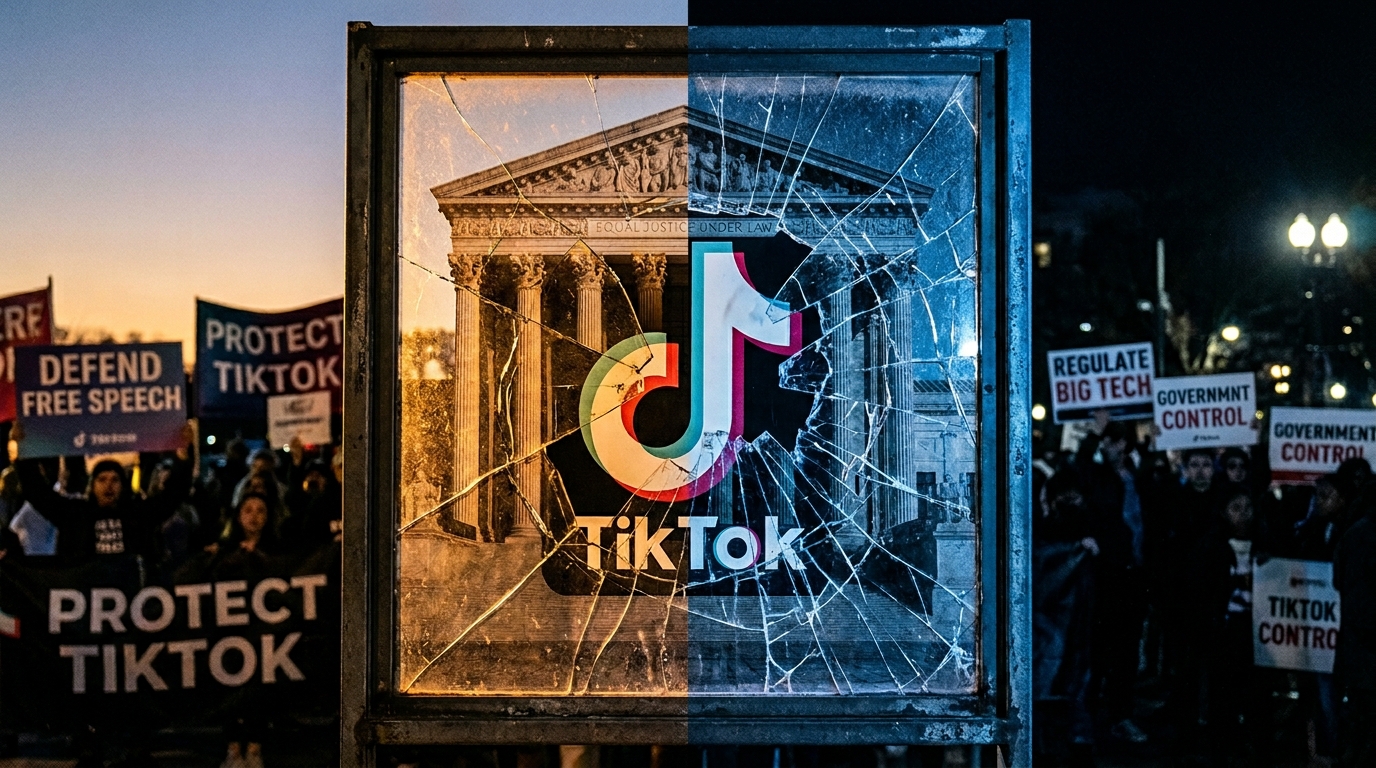
The TikTok ban saga continues to evolve in 2026, with the US Supreme Court once again weighing the constitutionality of forced divestiture laws targeting the Chinese-owned social media platform. After the court upheld the original ban law in January 2025, a series of executive extensions, legal challenges, and failed acquisition attempts have kept TikTok operational in the US — but in an increasingly precarious legal limbo that could resolve dramatically in either direction.
Timeline of Events
The Protecting Americans from Foreign Adversary Controlled Applications Act passed in April 2024 and was upheld by the Supreme Court in January 2025. The law required ByteDance to sell TikTok’s US operations or face a ban. President Biden, and subsequently President Trump, issued executive extensions giving ByteDance additional time to find a buyer — responding to the political reality that banning an app used by 170 million Americans was deeply unpopular regardless of national security arguments.
Multiple acquisition attempts failed. A consortium led by Oracle and including several investment firms offered $50 billion, but ByteDance rejected the deal over algorithm licensing terms. Microsoft re-entered negotiations but withdrew over concerns about inheriting content moderation liabilities. Most recently, a group including former Treasury Secretary Steven Mnuchin proposed a $60 billion deal that would see TikTok’s US operations restructured as an independent company — but with ByteDance retaining a significant minority stake, which Congress argued violated the spirit of the divestiture law.
The Current Legal Challenge
The Supreme Court agreed in March 2026 to hear a new challenge arguing that the extended timeline and repeated executive interventions have effectively transformed a security law into an ongoing government negotiation with a private company — raising due process and separation of powers concerns. TikTok’s lawyers argue that the government cannot indefinitely threaten to ban the platform while simultaneously extending deadline after deadline, creating a regulatory environment that chills investment, deters advertisers, and undermines the company’s ability to operate normally.
Impact on Users and Creators
The uncertainty has already had measurable effects. TikTok’s US user growth slowed from 15% annually to 3% as some users preemptively migrated content to Instagram Reels, YouTube Shorts, and Lemon8 (ironically, also a ByteDance property). Creator earnings declined as major advertisers reduced TikTok spending by an estimated 20%, redirecting budgets to platforms with less regulatory risk. The creator economy built on TikTok — estimated at $15 billion in annual commerce — faces existential uncertainty.
A ruling is expected by the end of 2026. The possible outcomes range from a final enforcement of the ban (forcing ByteDance to sell or shut down US operations), to a ruling that the divestiture law itself is unconstitutional as applied, to a court-ordered framework for a restructured sale. Whatever happens, the case will set lasting precedent for how the US government can regulate foreign-owned technology platforms — a question that extends far beyond TikTok to any app with Chinese, Russian, or other foreign ownership.
Key Aspects
This topic encompasses multiple important dimensions that affect businesses and individuals alike. Understanding each aspect provides valuable perspective on the broader implications.
Market Impact
- Growing adoption across industries
- Significant investment and innovation
- Competitive advantages for early adopters
- New business opportunities emerging
Challenges and Considerations
Implementation requires addressing multiple challenges including technical complexity, organizational readiness, and skill requirements. Success requires commitment to both planning and execution.
Success Factors
Organizations that succeed typically combine strong leadership, adequate resource allocation, clear objectives, and iterative improvement. They also maintain focus on measurable outcomes and ROI.
Looking Ahead
As this technology matures and becomes more mainstream, new opportunities and challenges will emerge. Staying informed and proactive positions organizations for success.
Practical Next Steps
Start by assessing your current position, identifying quick wins, and building momentum. Use early successes to secure support for broader initiatives and organizational change.