The Smartphone Battery Revolution: Silicon-Carbon Cells, AI Charging, and the End of Battery Anxiety
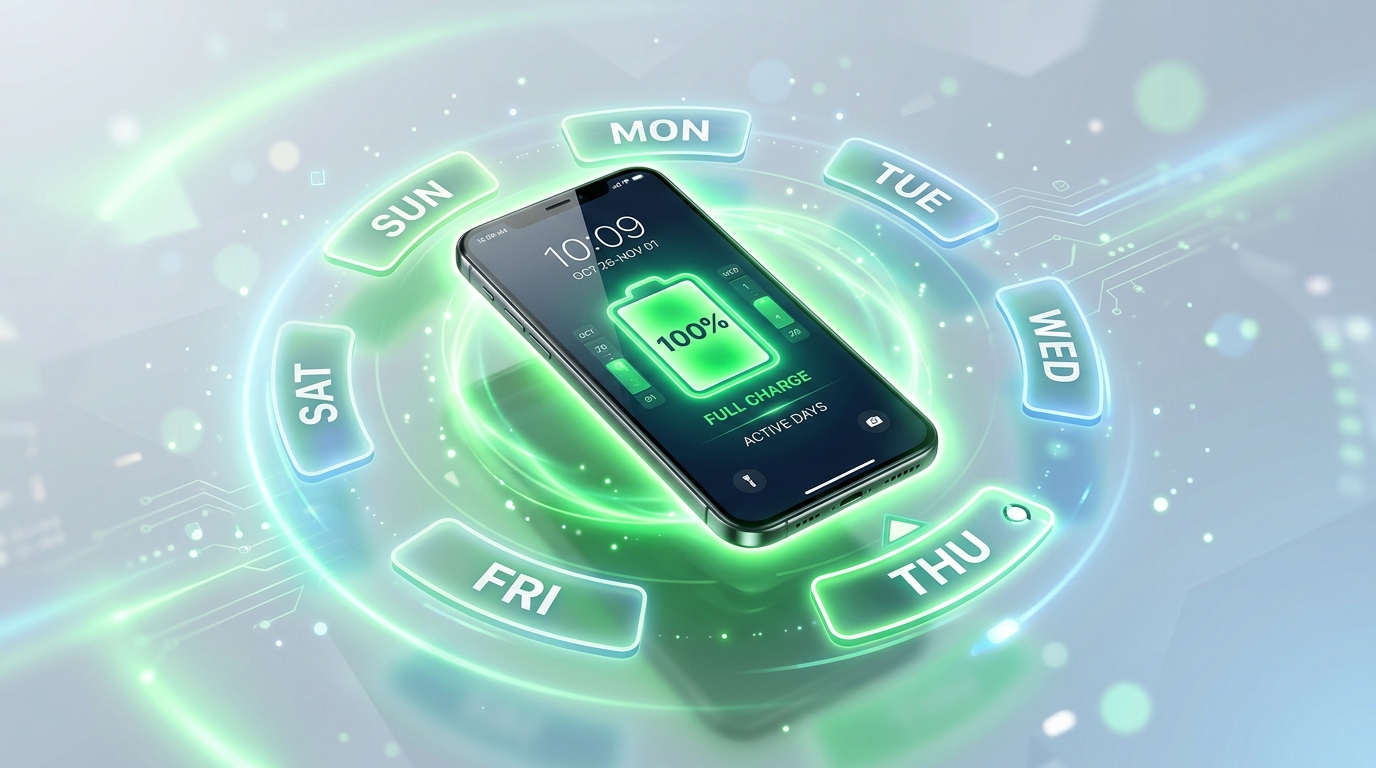
After years of gradual improvements, smartphone battery technology is poised for its most significant leap in a generation. Silicon-carbon anode batteries, graphene-enhanced cells, and smart charging AI are converging to address the one complaint that has topped user surveys every year since smartphones existed: battery life isn’t good enough. Here’s what’s changing in 2026 and what’s coming next.
Silicon-Carbon Batteries Arrive
Samsung’s Galaxy S26 Ultra and Honor’s Magic7 series are among the first major phones to ship with silicon-carbon anode batteries, replacing the graphite anodes used in lithium-ion cells since the 1990s. Silicon can theoretically store 10x more lithium ions per gram than graphite, but it swells and cracks during charging. The silicon-carbon composite solution — mixing silicon nanoparticles into a carbon matrix — achieves 3-4x the energy density improvement while maintaining the 1,000+ cycle lifespan consumers expect.
In practical terms, the Galaxy S26 Ultra’s 5,500mAh silicon-carbon battery delivers 7.5 hours of screen-on time in a body that’s actually thinner than last year’s model. The same technology in different form factors could mean full-day phones at 4,000mAh that are dramatically lighter, or current-thickness phones with 7,000mAh batteries lasting two full days. Manufacturers are choosing different trade-offs, but the underlying chemistry is a genuine generational improvement.
The Software Side: AI-Managed Charging
Equally important but less visible is the AI revolution in battery management. Modern phones don’t just charge batteries — they learn your usage patterns and optimize charging behavior to maximize long-term battery health. Apple’s Optimized Battery Charging, Samsung’s Adaptive Charging, and Google’s Adaptive Battery all use on-device machine learning to determine when you typically wake up and delay completing the last 20% of charging until just before that time, reducing the hours spent at 100% that degrade battery chemistry.
The newest iteration goes further. Samsung’s AI battery management in One UI 8 analyzes your upcoming calendar, location patterns, and historical usage to predict high-demand days (long commutes, outdoor plans with heavy camera use, travel requiring navigation) and adjusts background app behavior and display settings proactively. On predicted light-use days, it’s more generous with background activity. On predicted heavy days, it conserves more aggressively — all without user intervention.
Fast Charging Reaches New Territory
Chinese manufacturers continue pushing charging speeds. The Xiaomi 15 Ultra charges its 6,000mAh battery from 0 to 100% in 11 minutes using 200W wired charging. OPPO’s Find X8 Ultra achieves 100% in 15 minutes with 150W. These speeds require proprietary chargers and cables (standard USB-C PD tops out at 240W but most chargers deliver 65-100W), but they fundamentally change the charging paradigm. Plugging in during a morning shower gives you a full day’s battery — charging anxiety simply doesn’t exist.
Western manufacturers are more conservative, citing battery longevity concerns. Apple’s iPhone 16 Pro tops out at 45W (0-80% in 35 minutes), and Samsung’s S26 Ultra at 65W (0-80% in 25 minutes). Both companies argue that extreme charging speeds accelerate battery degradation, but Chinese manufacturers counter that their dual-cell battery architectures split the charging current, keeping each cell within safe thermal limits. Independent testing by AccuBattery suggests that 200W charging degrades batteries approximately 8% faster over 2 years than 45W charging — a trade-off many users willingly accept.
What’s Coming Next
Solid-state batteries, already appearing in EVs, are expected to reach smartphones by 2028-2029. When they do, the combination of higher energy density and faster charging could deliver 3-day battery life with 5-minute full charging — effectively eliminating battery life as a device concern. Combined with increasingly efficient chipsets (3nm and below) and OLED displays that consume less power per pixel, the smartphone battery anxiety that has persisted since the iPhone era may finally become a thing of the past.