EU AI Act Enforcement Begins: What Every Tech Company Needs to Know
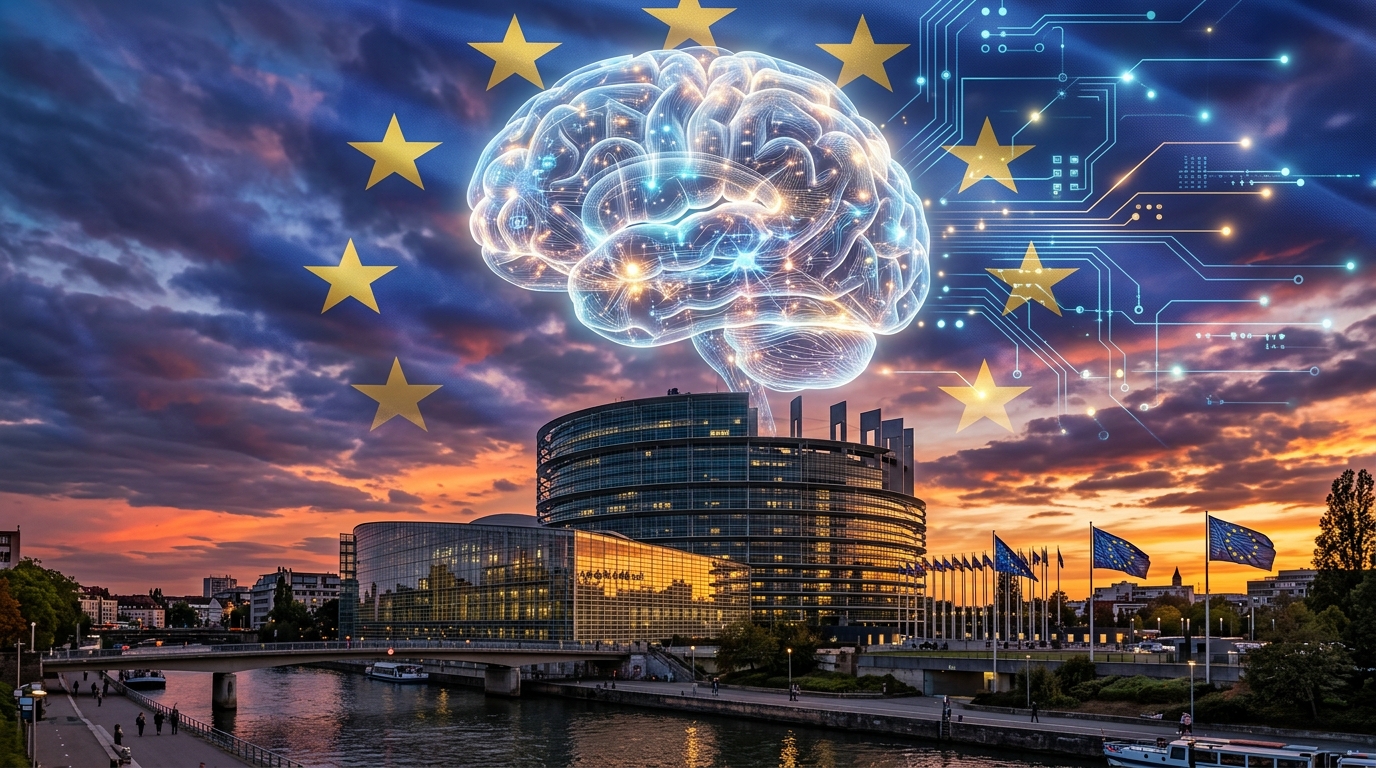
The European Union’s AI Act officially entered its enforcement phase on March 1, 2026, making it the world’s first comprehensive legal framework governing artificial intelligence. Companies operating in or selling to EU markets now face binding obligations that vary based on the risk level of their AI systems — and the penalties for non-compliance are severe enough to reshape how the entire global AI industry builds and deploys products.
The Risk-Based Framework
The AI Act classifies AI systems into four risk tiers. Unacceptable risk applications — including real-time biometric surveillance in public spaces, social scoring systems, and manipulative AI targeting vulnerable populations — are outright banned. High-risk systems like AI used in hiring decisions, credit scoring, law enforcement, and medical diagnostics face the strictest requirements: mandatory impact assessments, human oversight mechanisms, detailed technical documentation, and registration in a public EU database.
Limited risk applications such as chatbots and AI-generated content must disclose that users are interacting with AI. Minimal risk systems like spam filters and video game AI face no additional requirements. The challenge for companies lies in determining which category their products fall into — and the EU has provided specific guidance through a 400-page implementation manual published alongside the enforcement date.
What Companies Must Do Now
For high-risk AI systems, organizations must establish quality management systems, maintain detailed logs of training data and model decisions, conduct regular bias audits, and ensure meaningful human intervention is possible at every decision point. Training data must be documented with provenance information, and companies must demonstrate that datasets are representative and free from prohibited biases.
Generative AI models like GPT-5 and Gemini fall under a new “general-purpose AI” category with transparency requirements. Providers must publish summaries of training data, comply with EU copyright law, and disclose the computational resources used during training. Models designated as posing “systemic risk” — currently those trained with more than 10^25 FLOPS — face additional obligations including adversarial testing and cybersecurity measures.
Global Ripple Effects
Even companies based outside the EU are affected if their AI products are used by EU residents. This extraterritorial reach has prompted several US tech companies to create separate AI product versions for European markets — a practice industry watchers are calling “AI regionalization.” Meanwhile, countries including Brazil, Canada, and Japan are developing their own AI regulations using the EU framework as a template, suggesting a convergence toward global AI governance standards within the next few years.
Fines for violations scale up to 35 million euros or 7% of worldwide annual revenue, whichever is higher — exceeding even the GDPR’s penalty structure. The message is clear: AI regulation is no longer theoretical, and companies that haven’t started compliance work are already behind.
How This Technology Works
The underlying mechanisms of this technology have evolved significantly. Modern implementations leverage advanced algorithms and machine learning patterns to deliver results at scale.
Key Benefits and Use Cases
- Enterprise-level scalability and performance
- Real-world applications across multiple industries
- Cost-effectiveness compared to traditional approaches
- Future-proof architecture for emerging needs
Challenges and Limitations
While promising, current implementations face several hurdles including integration complexity, resource requirements, and the need for specialized expertise. Organizations must carefully evaluate their readiness before implementation.
What’s Next?
The trajectory suggests continued innovation and adoption. Industry experts predict significant advancements in the coming years as technology matures and becomes more accessible to organizations of all sizes.
Conclusion
EU AI Act Enforcement Begins: What Every Tech Company Needs to Know represents an important milestone in technological evolution. As the landscape continues to shift, staying informed about these developments will be crucial for businesses and professionals alike.
How This Technology Works
The underlying mechanisms of this technology have evolved significantly. Modern implementations leverage advanced algorithms and machine learning patterns to deliver results at scale.
Key Benefits and Use Cases
- Enterprise-level scalability and performance
- Real-world applications across multiple industries
- Cost-effectiveness compared to traditional approaches
- Future-proof architecture for emerging needs
Challenges and Limitations
While promising, current implementations face several hurdles including integration complexity, resource requirements, and the need for specialized expertise. Organizations must carefully evaluate their readiness before implementation.
What’s Next?
The trajectory suggests continued innovation and adoption. Industry experts predict significant advancements in the coming years as technology matures and becomes more accessible to organizations of all sizes.
Conclusion
EU AI Act Enforcement Begins: What Every Tech Company Needs to Know represents an important milestone in technological evolution. As the landscape continues to shift, staying informed about these developments will be crucial for businesses and professionals alike.