
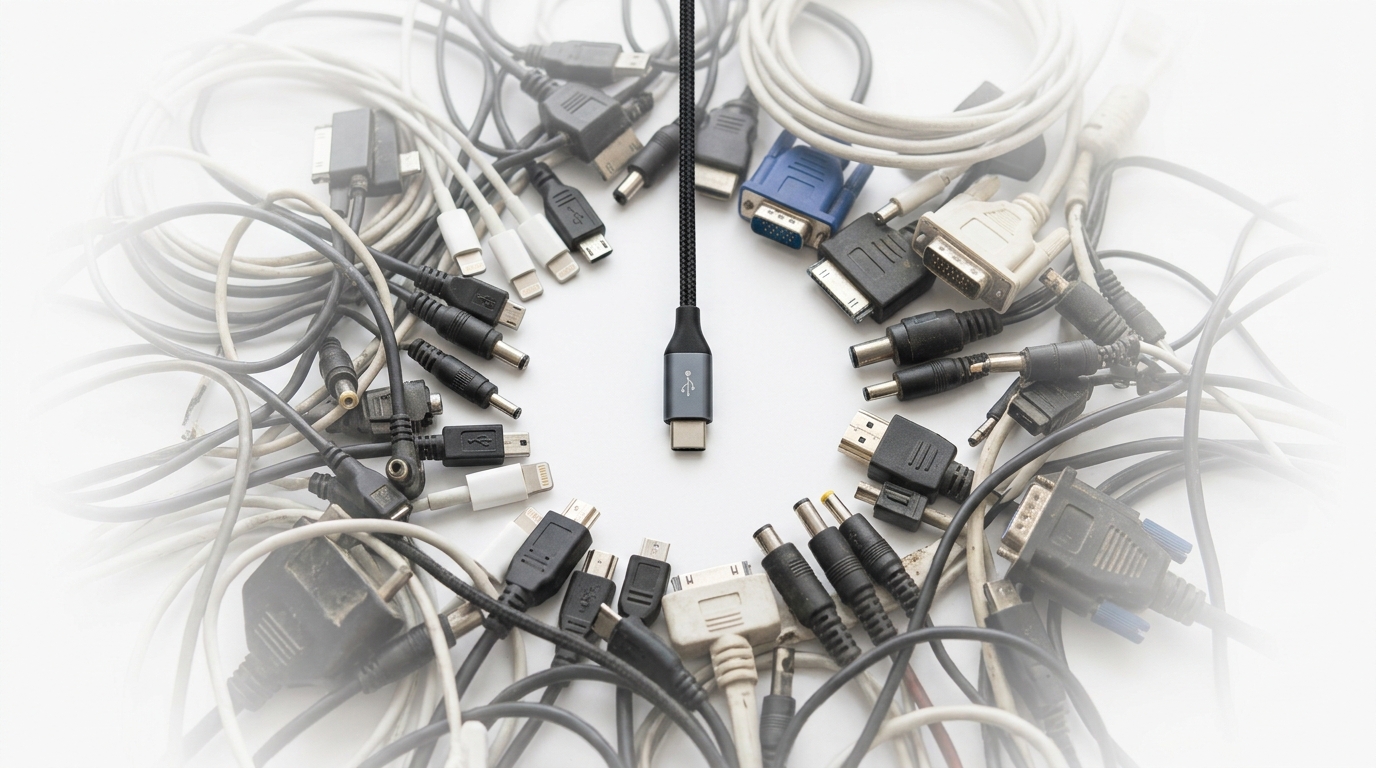
USB-C Universal Standard Takes Full Effect as EU Law Reshapes Global Electronics
The USB-C universal standard mandate is now fully enforced across the EU as of April 2026, and the effects are spreading globally. All new smartphones, tablets, laptops, earbuds, portable speakers, cameras, handheld game consoles, and e-readers sold in the EU must use USB-C for wired charging. Manufacturers who ship non-compliant devices face fines and import bans — and the practical result is that proprietary charging cables are going extinct worldwide, not just in Europe.
What’s Changed
The regulation, based on the EU’s 2022 Common Charger Directive, initially targeted smartphones and small electronics with a December 2024 compliance deadline. Laptops received an extended deadline of April 2026 due to the higher power requirements and diverse charging standards in that category. With the laptop deadline now passed, effectively every portable electronic device sold in Europe uses the same cable and connector.
Apple’s compliance was the most closely watched. After years of defending Lightning as a superior connector, Apple transitioned the iPhone to USB-C starting with iPhone 15 in 2023. The iPad lineup completed its transition in 2024. Apple’s remaining Lightning products — the MagSafe battery pack and some older accessories — have been discontinued or updated. The AirPods Max, AirPods Pro, and base AirPods all ship with USB-C cases worldwide.
Global Ripple Effects
While the EU mandate only applies to products sold in European markets, manufacturers have overwhelmingly chosen to adopt USB-C globally rather than maintain separate product lines. The economics are straightforward: designing, manufacturing, and stocking two versions of every product — one with USB-C for Europe and one with a proprietary connector elsewhere — costs more than simply using USB-C everywhere.
India adopted a similar USB-C mandate effective March 2025, and Brazil’s version takes effect in January 2027. The US has not passed federal legislation, but consumer demand and manufacturer standardization have made it a non-issue — USB-C devices dominate the US market by default. The practical reality is that the EU successfully set a global standard through regulatory action.
Benefits for Consumers
The average European household previously needed 5-7 different charging cables for their devices. That number has dropped to 1-2 (USB-C plus wireless charging). The European Commission estimates that the rule prevents 11,000 tons of electronic waste annually from discarded cables and chargers. Consumers can now confidently purchase a single high-quality USB-C cable and charger that works with their phone, tablet, laptop, earbuds, camera, portable speaker, and handheld gaming device.
USB-C also supports the full range of modern charging standards. USB Power Delivery can supply up to 240 watts — enough for gaming laptops. The same cable that charges your earbuds can charge your MacBook Pro. Thunderbolt 5 over USB-C delivers 120 Gbps data transfer speeds and can drive multiple 4K displays. The one-cable-for-everything dream is finally reality, and it took regulatory pressure to get there.
Key Aspects
This topic encompasses multiple important dimensions that affect businesses and individuals alike. Understanding each aspect provides valuable perspective on the broader implications.
Market Impact
- Growing adoption across industries
- Significant investment and innovation
- Competitive advantages for early adopters
- New business opportunities emerging
Challenges and Considerations
Implementation requires addressing multiple challenges including technical complexity, organizational readiness, and skill requirements. Success requires commitment to both planning and execution.
Success Factors
Organizations that succeed typically combine strong leadership, adequate resource allocation, clear objectives, and iterative improvement. They also maintain focus on measurable outcomes and ROI.
Looking Ahead
As this technology matures and becomes more mainstream, new opportunities and challenges will emerge. Staying informed and proactive positions organizations for success.
Practical Next Steps
Start by assessing your current position, identifying quick wins, and building momentum. Use early successes to secure support for broader initiatives and organizational change.