
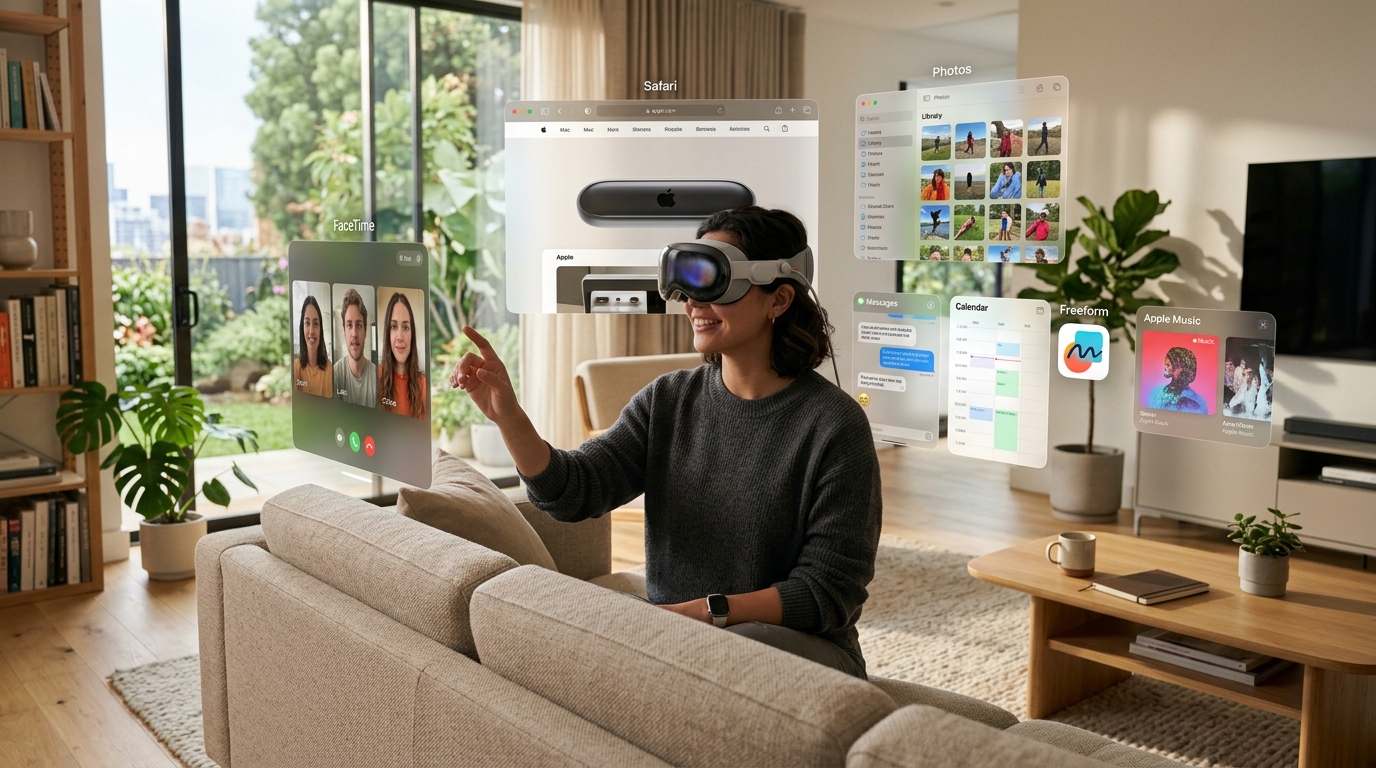
Apple Vision Pro 2: Leaked Specs Reveal Lighter, Cheaper Spatial Computer
Leaked specifications from multiple supply chain sources paint a detailed picture of Apple’s Vision Pro 2, expected to be announced at WWDC in June 2026. The second-generation headset reportedly addresses the two biggest complaints about the original — weight and price — while adding features that could make spatial computing genuinely mainstream.
Lighter, More Comfortable Design
The original Vision Pro weighs 650 grams, and prolonged use causes noticeable neck strain. The Vision Pro 2 reportedly drops to 420 grams — a 35% reduction achieved through a combination of thinner custom micro-OLED displays, a new carbon fiber and aluminum frame, and a redesigned battery system that integrates partially into the headband rather than relying entirely on an external battery pack.
The display resolution remains at 23 million pixels per eye — already the highest of any consumer headset — but Apple has improved brightness by 40% and expanded the field of view from 90 to 110 degrees. This wider FOV addresses a common criticism that the original felt like looking through binoculars. The refresh rate bumps from 90Hz to 120Hz for all content, reducing motion sickness for sensitive users.
New M5 Chip and Eye-Tracking Improvements
Power comes from Apple’s M5 chip paired with a second-generation R2 sensor processor. The combination delivers roughly 50% more GPU performance while consuming less power, enabling the battery to last 3.5 hours compared to the original’s 2-hour limit. Eye tracking has been refined with additional infrared sensors, reducing input lag to under 8 milliseconds and improving accuracy in small-target interactions like spreadsheet cells and code editors.
A new feature called “Pass-Through Plus” uses computational photography to make the video pass-through image look more natural. The original Vision Pro’s pass-through, while the best available, still looked noticeably digital. Pass-Through Plus reportedly reduces the uncanny quality through higher dynamic range processing and more accurate color reproduction, making the blended digital-physical experience feel less jarring during extended work sessions.
Price Drop and Market Strategy
The biggest news may be the price. The Vision Pro 2 is expected to launch at $2,499 — a significant reduction from the original’s $3,499 starting price. Apple is reportedly also keeping the first-generation model in the lineup at a reduced $2,499 price point itself, dropping to around $1,999 — creating a more accessible entry point.
Apple’s long-term spatial computing strategy appears to be following the same pattern as Apple Watch: launch premium, iterate on comfort and health features, gradually expand the market. Analysts at IDC predict the lower price and lighter weight could push Vision Pro 2 sales to 4-5 million units in its first year, compared to the estimated 600,000 units the original sold. If accurate, that would create a large enough installed base to attract the developer investment needed to build a sustainable app ecosystem.
Key Aspects
This topic encompasses multiple important dimensions that affect businesses and individuals alike. Understanding each aspect provides valuable perspective on the broader implications.
Market Impact
- Growing adoption across industries
- Significant investment and innovation
- Competitive advantages for early adopters
- New business opportunities emerging
Challenges and Considerations
Implementation requires addressing multiple challenges including technical complexity, organizational readiness, and skill requirements. Success requires commitment to both planning and execution.
Success Factors
Organizations that succeed typically combine strong leadership, adequate resource allocation, clear objectives, and iterative improvement. They also maintain focus on measurable outcomes and ROI.
Looking Ahead
As this technology matures and becomes more mainstream, new opportunities and challenges will emerge. Staying informed and proactive positions organizations for success.
Practical Next Steps
Start by assessing your current position, identifying quick wins, and building momentum. Use early successes to secure support for broader initiatives and organizational change.