The Deepfake Crisis: Why Digital Trust Is Collapsing and What We Can Do About It
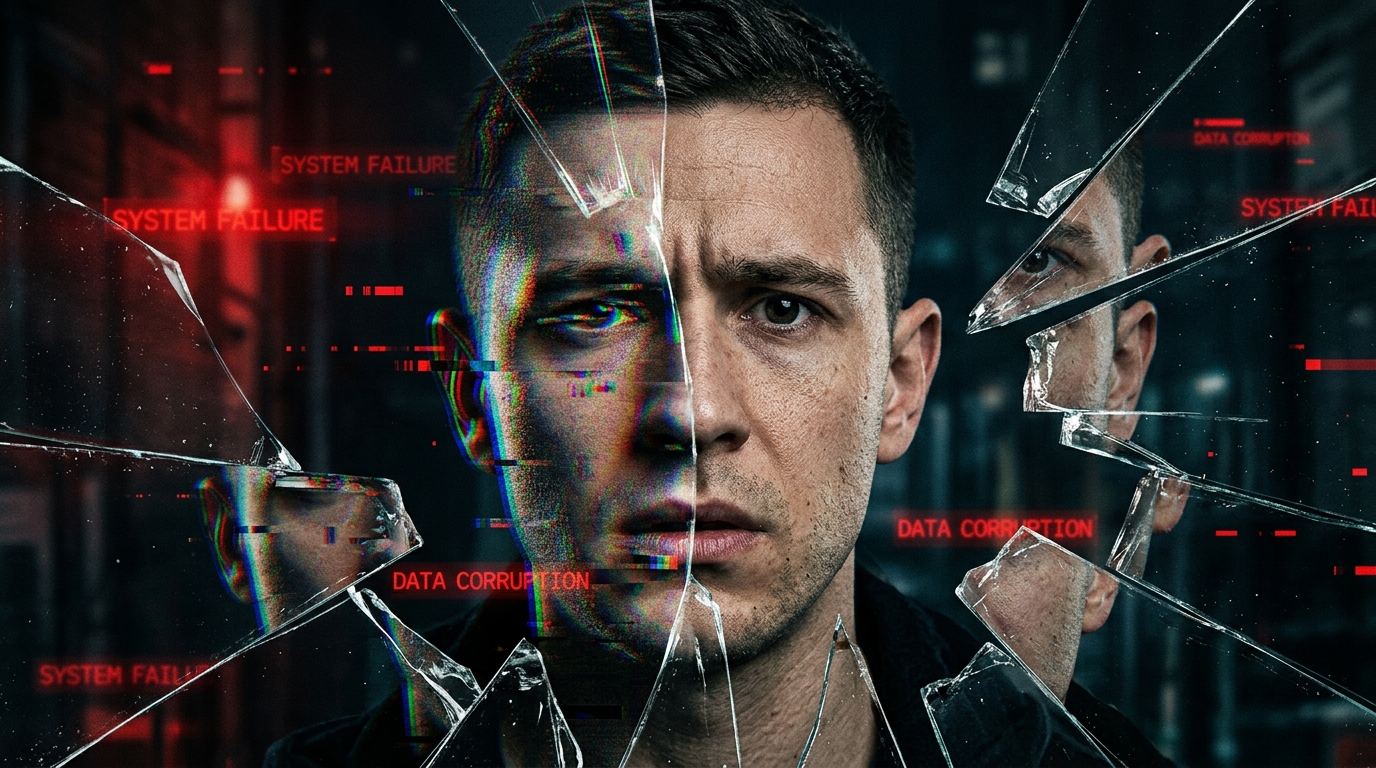
Deepfake technology has progressed to the point where the average person cannot reliably distinguish AI-generated video, audio, or images from authentic media. This isn’t a theoretical future concern — it’s the current reality in 2026, and it’s creating a crisis of digital trust that affects everything from elections and journalism to personal relationships and courtroom evidence. The tools to create convincing deepfakes are freely available, the tools to detect them are falling behind, and society is still figuring out how to adapt.
The State of Deepfake Technology
Creating a convincing deepfake video in 2026 requires nothing more than a consumer-grade computer and one of several open-source or commercial tools. Models like DeepFaceLab, FaceSwap, and numerous AI video generators can produce face-swapped videos in which one person’s face is seamlessly mapped onto another’s body in motion, with accurate lighting, expression mirroring, and lip-sync. The process that once required hours of training on thousands of images can now produce usable results from a single reference photo and a few minutes of computation.
Audio deepfakes are even more accessible and harder to detect. Voice cloning tools from companies like ElevenLabs, Resemble AI, and Coqui can create a synthetic voice from as little as 3 seconds of sample audio. The cloned voice can speak any text with the inflection, pacing, and emotional tone of the original speaker. In a blind listening test conducted by University College London, participants correctly identified AI-generated speech only 53% of the time — essentially a coin flip — down from 73% accuracy just two years ago as synthesis quality has improved.
Image generation has similarly crossed the authenticity threshold. AI-generated photos of people, events, and scenes — created by Midjourney, DALL-E 3, Stable Diffusion, and Flux — are routinely shared on social media without users recognizing them as synthetic. A Stanford study found that when AI-generated images of news events are presented alongside real photographs, participants’ ability to distinguish them drops to 48% — worse than random guessing, because the AI images are often more visually polished than authentic news photos.
Real-World Harm Happening Now
The most immediate harm from deepfakes is non-consensual intimate imagery. AI tools can generate realistic nude images of any person from clothed photographs, and these tools are being used at epidemic scale — primarily targeting women and girls. The UK’s Revenge Porn Helpline reported a 400% increase in cases involving AI-generated intimate images in 2025. School administrators across the US, UK, and Australia have dealt with incidents where students created and distributed AI-generated explicit images of classmates, using nothing more than a smartphone app and school yearbook photos.
Financial fraud through deepfakes has also escalated dramatically. In the most high-profile case of 2025, a Hong Kong-based multinational lost $25 million after a finance department employee joined a video conference call where every other participant — including the company’s CFO — was a deepfake. The employee, believing they were on a legitimate call with senior executives, authorized multiple wire transfers before the fraud was discovered. Similar attacks targeting smaller businesses occur regularly but receive less media attention.
Political deepfakes have emerged as a serious threat to democratic processes. During the 2024 US election cycle, deepfake robocalls impersonating President Biden discouraged voters in New Hampshire from participating in the primary. In India’s 2024 general election, deepfake videos of political leaders making inflammatory statements circulated widely on WhatsApp before fact-checkers could respond. In both cases, the deepfakes were eventually debunked — but not before reaching millions of viewers and potentially influencing behavior.
Journalism and evidence integrity face a more insidious challenge: the “liar’s dividend.” As awareness of deepfakes grows, authentic media can be dismissed as fake. Politicians caught on video making inappropriate remarks can claim the footage is AI-generated. Criminals presented with video evidence can challenge its authenticity. Witnesses to events captured on camera face skepticism about whether their recordings are real. The mere existence of deepfake technology undermines trust in all visual and audio media — which may be more damaging than any individual deepfake.
Detection: A Losing Arms Race
Detection technology exists but faces fundamental disadvantages. Companies including Intel (FakeCatcher), Microsoft (Video Authenticator), Sensity AI, and several academic research groups have developed deepfake detectors that analyze visual artifacts, audio anomalies, and statistical patterns in AI-generated media. The best detectors achieve 90-95% accuracy on well-known deepfake generation methods — but here’s the problem: each improvement in detection is promptly used by deepfake creators to train better generators that evade the new detectors.
This adversarial dynamic means detection accuracy against the latest generation models is always lower than against older techniques. A detector trained on 2024-era deepfakes might achieve 95% accuracy on those samples but only 65% on 2026-era generations. The detectors must be continuously retrained as synthesis technology evolves, creating a costly and never-ending cat-and-mouse game. Academic researchers privately acknowledge that detection-based approaches alone cannot solve the deepfake problem because the defenders will always be one step behind the attackers.
Social media platforms have deployed detection systems with mixed results. Meta and YouTube use automated classifiers that flag suspected deepfakes for human review, but the false-positive rate is high enough that legitimate content creators frequently have their authentic content incorrectly flagged. The platforms face a dilemma: aggressive detection catches more deepfakes but also disrupts legitimate users; lenient detection lets more deepfakes through. Neither option is satisfactory, and the platforms’ track record on content moderation in general doesn’t inspire confidence.
Technical Countermeasures: Provenance Over Detection
The more promising technical approach is provenance rather than detection — authenticating media at the point of creation rather than analyzing it after the fact. The Coalition for Content Provenance and Authenticity (C2PA), founded by Adobe, Microsoft, Intel, and the BBC, has developed a standard for embedding cryptographically signed metadata into photos, videos, and audio at the moment of capture. A camera or phone that supports C2PA records a tamper-evident chain of custody: who created the media, when, where, with what device, and what edits (if any) have been made.
The standard is gaining adoption. Sony, Nikon, Canon, and Leica have shipped cameras with C2PA signing capability. Samsung and Google have added C2PA support to their latest smartphone camera apps. Adobe Photoshop, Lightroom, and Premiere Pro embed C2PA credentials when exporting media. The Associated Press, Reuters, and BBC now publish C2PA-signed photos with their news coverage. Social media platforms including LinkedIn and Publicis have begun surfacing C2PA provenance information when available, showing users a “verified origin” badge on authenticated media.
Provenance has clear advantages over detection: it provides positive proof of authenticity rather than probabilistic claims about fakeness. A C2PA-signed photo from a Reuters photographer’s Sony camera is verifiably authentic — you can trace its entire chain of custody. An unsigned photo from an anonymous social media account might be real or fake, but the absence of provenance credentials is itself informative. Over time, as C2PA adoption grows, unsigned media will face increasing skepticism — shifting the burden of proof from “prove it’s fake” to “prove it’s real.”
The limitation is adoption coverage. C2PA only works for media created on supported devices and published through supporting platforms. Older cameras, budget smartphones, and alternative social media platforms may not implement the standard for years. And deliberate circumvention is possible: someone can photograph a screen displaying a deepfake, and the resulting photo would carry valid C2PA credentials from the real camera that captured it.
Legal Frameworks Emerge
Legislative responses to deepfakes are accelerating worldwide but remain fragmentary. The US has no federal deepfake law, though 45 states have passed laws addressing specific harms — primarily non-consensual intimate deepfakes (criminalized in 38 states) and election-related deepfakes (restricted in 27 states). The proposed DEFIANCE Act at the federal level would create a civil cause of action for victims of non-consensual deepfake pornography with statutory damages of up to $150,000, but it remained stalled in committee as of early 2026.
The EU’s AI Act classifies deepfakes as “limited risk” AI systems that require transparency obligations — specifically, creators must disclose that content is AI-generated. But enforcement is challenging: a bad actor creating deepfakes for fraud or harassment is unlikely to voluntarily label their content. The EU is exploring additional measures, including requiring AI platforms to embed detectable watermarks in generated content, but watermarking can be removed or degraded through simple re-encoding.
China has implemented the most aggressive regulatory approach. The Deep Synthesis Provisions, effective since January 2023, require providers of deepfake technology to verify users’ real identities, embed invisible watermarks in all generated content, and maintain logs of generated content for audit. Non-compliance carries criminal penalties. While enforcement is imperfect, the framework provides a regulatory model that some Western policymakers are studying as a potential template.
Adapting to a Post-Trust Media Environment
The uncomfortable truth is that no combination of technology, regulation, and platform policies will fully solve the deepfake problem. Detection will always lag behind generation. Provenance helps but can’t cover all media. Laws can punish bad actors after the fact but can’t prevent viral deepfakes from spreading. The deeper challenge is cultural: society must develop new norms for evaluating media authenticity in an environment where “seeing is believing” is no longer reliable.
Media literacy education is expanding, with schools in several countries adding deepfake awareness to their curricula. News organizations are investing in verification units that cross-reference visual claims with satellite imagery, metadata analysis, and open-source intelligence. Individual users are slowly learning to apply skepticism to dramatic visual claims — especially those that are emotionally provocative, politically convenient, or shared without clear sourcing.
The path forward almost certainly involves a layered approach: technical provenance standards as the foundation, detection tools as a supplement, legal frameworks creating consequences for malicious use, platform policies enforcing transparency, and public education building critical thinking skills. No single layer is sufficient, but together they can reduce — though not eliminate — the harm that deepfake technology enables. The age of implicit trust in visual media is over. What replaces it will define how information, truth, and trust function in the digital century.
Related articles: Fintech Super Apps Dominate Emerging Mar | Neuromorphic Computing: Brain-Inspired C | 3D Bioprinting in 2026: From Lab Curiosi