
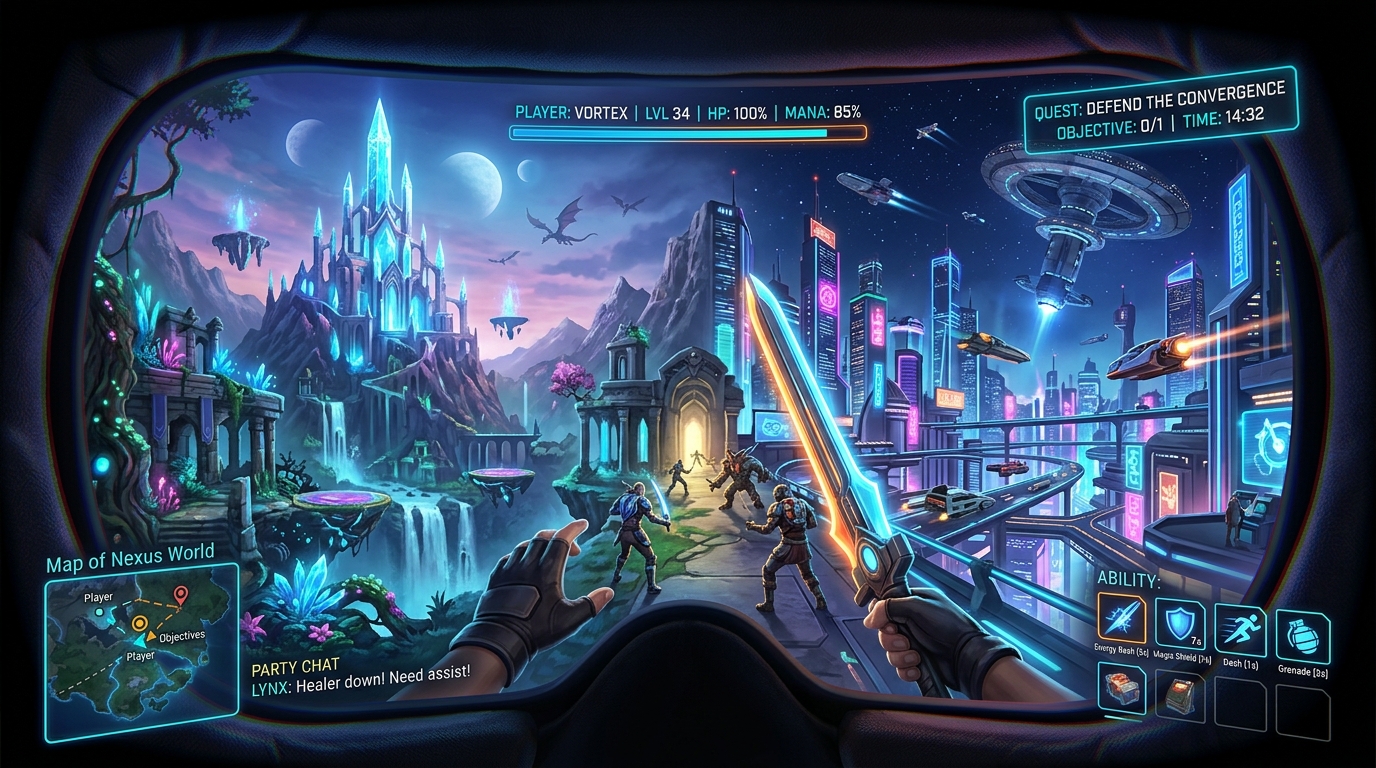
VR Gaming Revenue Tops $12 Billion as the Market Hits a Tipping Point
The global VR gaming market generated $12.3 billion in revenue in 2025, according to a new report from Newzoo — a 47% increase from the prior year and the first time the sector has crossed the $10 billion threshold. The growth is driven by a combination of cheaper hardware, better games, and the expanding ecosystem around Meta Quest, PlayStation VR2, and a new wave of standalone headsets from ByteDance, HTC, and Samsung.
What’s Driving Revenue Growth
Hardware sales account for 42% of the $12.3 billion figure, with Meta Quest 3 dominating at 58% market share of standalone VR headsets. Meta sold an estimated 15 million Quest 3 and Quest 3S units in 2025, buoyed by aggressive pricing ($299 for Quest 3S) and a growing library of exclusive titles. The Quest ecosystem has become to VR what iPhone became to smartphones — the default platform that developers prioritize.
Software and content revenue — games, apps, fitness subscriptions, and experiences — accounts for the remaining 58% and is growing faster than hardware at 62% year-over-year. The Meta Quest Store reportedly crossed $3 billion in lifetime developer revenue, with six individual VR games each generating over $100 million. The standout titles of 2025 included Batman: Arkham Shadow, Asgard’s Wrath 2, and the VR version of Grand Theft Auto: San Andreas — games with production values that rival flat-screen titles.
The Fitness Connection
VR fitness has emerged as an unexpectedly large revenue driver, accounting for an estimated $1.8 billion of the total market. Apps like Supernatural (acquired by Meta), FitXR, and Les Mills Bodycombat have attracted millions of users who use VR as their primary workout tool. Health insurers in Germany, Japan, and the UK now subsidize VR headset purchases as part of fitness incentive programs, recognizing that VR exercise programs show higher long-term adherence rates than traditional gym memberships.
Enterprise VR Contribution
While gaming dominates headlines, enterprise VR applications contributed $3.1 billion in revenue. Training simulations for surgery, heavy machinery operation, emergency response, and military applications represent the largest enterprise category. Walmart uses VR to train over 1 million associates annually, and the US military’s Synthetic Training Environment program is one of the largest single VR contracts ever awarded.
Looking ahead, analysts project the VR gaming market will reach $20 billion by 2028, driven by continued hardware improvements, the potential release of a more affordable Apple Vision headset, and the maturation of multiplayer VR gaming — still early but growing rapidly with platforms like VRChat, Rec Room, and Horizon Worlds collectively hosting over 50 million monthly active users.
Key Aspects
This topic encompasses multiple important dimensions that affect businesses and individuals alike. Understanding each aspect provides valuable perspective on the broader implications.
Market Impact
- Growing adoption across industries
- Significant investment and innovation
- Competitive advantages for early adopters
- New business opportunities emerging
Challenges and Considerations
Implementation requires addressing multiple challenges including technical complexity, organizational readiness, and skill requirements. Success requires commitment to both planning and execution.
Success Factors
Organizations that succeed typically combine strong leadership, adequate resource allocation, clear objectives, and iterative improvement. They also maintain focus on measurable outcomes and ROI.
Looking Ahead
As this technology matures and becomes more mainstream, new opportunities and challenges will emerge. Staying informed and proactive positions organizations for success.
Practical Next Steps
Start by assessing your current position, identifying quick wins, and building momentum. Use early successes to secure support for broader initiatives and organizational change.
Key Aspects
This topic encompasses multiple important dimensions that affect businesses and individuals alike. Understanding each aspect provides valuable perspective on the broader implications.
Market Impact
- Growing adoption across industries
- Significant investment and innovation
- Competitive advantages for early adopters
- New business opportunities emerging
Challenges and Considerations
Implementation requires addressing multiple challenges including technical complexity, organizational readiness, and skill requirements. Success requires commitment to both planning and execution.
Success Factors
Organizations that succeed typically combine strong leadership, adequate resource allocation, clear objectives, and iterative improvement. They also maintain focus on measurable outcomes and ROI.
Looking Ahead
As this technology matures and becomes more mainstream, new opportunities and challenges will emerge. Staying informed and proactive positions organizations for success.
Practical Next Steps
Start by assessing your current position, identifying quick wins, and building momentum. Use early successes to secure support for broader initiatives and organizational change.