
Solid-State Batteries Promise 1,000-Mile EV Range by 2028
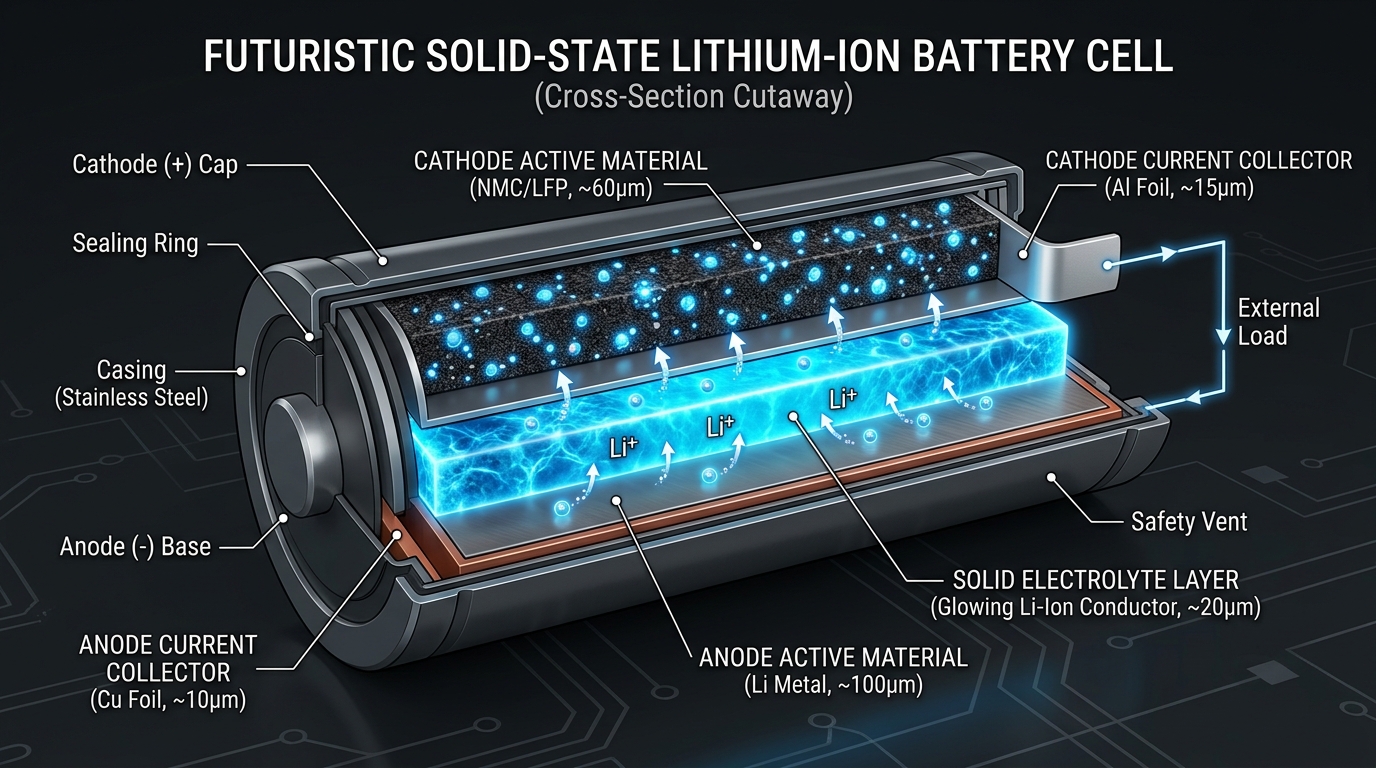
Toyota, Samsung SDI, and QuantumScape all announced major solid-state battery breakthroughs in early 2026, bringing the technology closer to commercial reality. Solid-state batteries replace the liquid electrolyte in conventional lithium-ion cells with a solid material, promising higher energy density, faster charging, longer lifespan, and near-zero fire risk. The race to commercialize them could define the next era of electric vehicles.
Toyota’s Prototype Performance
Toyota demonstrated a working solid-state prototype cell in February that achieves 900 Wh/L volumetric energy density — roughly double the 450 Wh/L of current best-in-class lithium-ion cells used in Tesla vehicles. In practical terms, this means an EV battery pack half the size and weight could deliver the same range, or a same-sized pack could provide 1,000+ miles per charge. Toyota’s test cell also charged from 10% to 80% in 10 minutes — compared to 30-40 minutes for current fast-charging EVs.
Toyota announced that solid-state batteries will debut in a production vehicle in 2028, starting with a luxury sedan before expanding to mass-market models. The company has invested $13.5 billion in battery technology over the past three years and holds over 1,300 solid-state battery patents — more than any other company.
Samsung SDI and QuantumScape Progress
Samsung SDI showed its own solid-state cells with 500-mile estimated range for a mid-size sedan, with pilot production scheduled to begin in late 2027. Their approach uses a sulfide-based solid electrolyte that Samsung claims is easier to manufacture at scale than the oxide-based approach most competitors use.
QuantumScape, the US startup backed by $300 million from Volkswagen, has completed its first 100,000-mile equivalent durability test. Their ceramic separator technology retained 95% capacity after 1,000 charge-discharge cycles — a critical milestone proving that solid-state cells can last as long as conventional batteries. Volkswagen plans to integrate QuantumScape cells into production EVs starting in 2028.
Manufacturing Challenges Remain
The biggest obstacle is no longer the chemistry — it’s mass production. Solid-state batteries require manufacturing environments 100x cleaner than conventional battery plants because even microscopic contaminants can create shorts in the thin solid electrolyte layer. Production speeds are currently 10-20x slower than conventional lithium-ion lines, and yields are below 70% for most manufacturers.
Cost is another hurdle. Current solid-state cells cost roughly $400 per kWh to produce, compared to $100 per kWh for established lithium-ion technology. Analysts at BloombergNEF project that solid-state costs will drop to $150/kWh by 2030 as manufacturing scales, eventually reaching cost parity with lithium-ion by 2033. Until then, solid-state batteries will likely appear first in premium vehicles where buyers are willing to pay more for superior range and charging speed.
Key Aspects
This topic encompasses multiple important dimensions that affect businesses and individuals alike. Understanding each aspect provides valuable perspective on the broader implications.
Market Impact
- Growing adoption across industries
- Significant investment and innovation
- Competitive advantages for early adopters
- New business opportunities emerging
Challenges and Considerations
Implementation requires addressing multiple challenges including technical complexity, organizational readiness, and skill requirements. Success requires commitment to both planning and execution.
Success Factors
Organizations that succeed typically combine strong leadership, adequate resource allocation, clear objectives, and iterative improvement. They also maintain focus on measurable outcomes and ROI.
Looking Ahead
As this technology matures and becomes more mainstream, new opportunities and challenges will emerge. Staying informed and proactive positions organizations for success.
Practical Next Steps
Start by assessing your current position, identifying quick wins, and building momentum. Use early successes to secure support for broader initiatives and organizational change.
Key Aspects
This topic encompasses multiple important dimensions that affect businesses and individuals alike. Understanding each aspect provides valuable perspective on the broader implications.
Market Impact
- Growing adoption across industries
- Significant investment and innovation
- Competitive advantages for early adopters
- New business opportunities emerging
Challenges and Considerations
Implementation requires addressing multiple challenges including technical complexity, organizational readiness, and skill requirements. Success requires commitment to both planning and execution.
Success Factors
Organizations that succeed typically combine strong leadership, adequate resource allocation, clear objectives, and iterative improvement. They also maintain focus on measurable outcomes and ROI.
Looking Ahead
As this technology matures and becomes more mainstream, new opportunities and challenges will emerge. Staying informed and proactive positions organizations for success.
Practical Next Steps
Start by assessing your current position, identifying quick wins, and building momentum. Use early successes to secure support for broader initiatives and organizational change.