
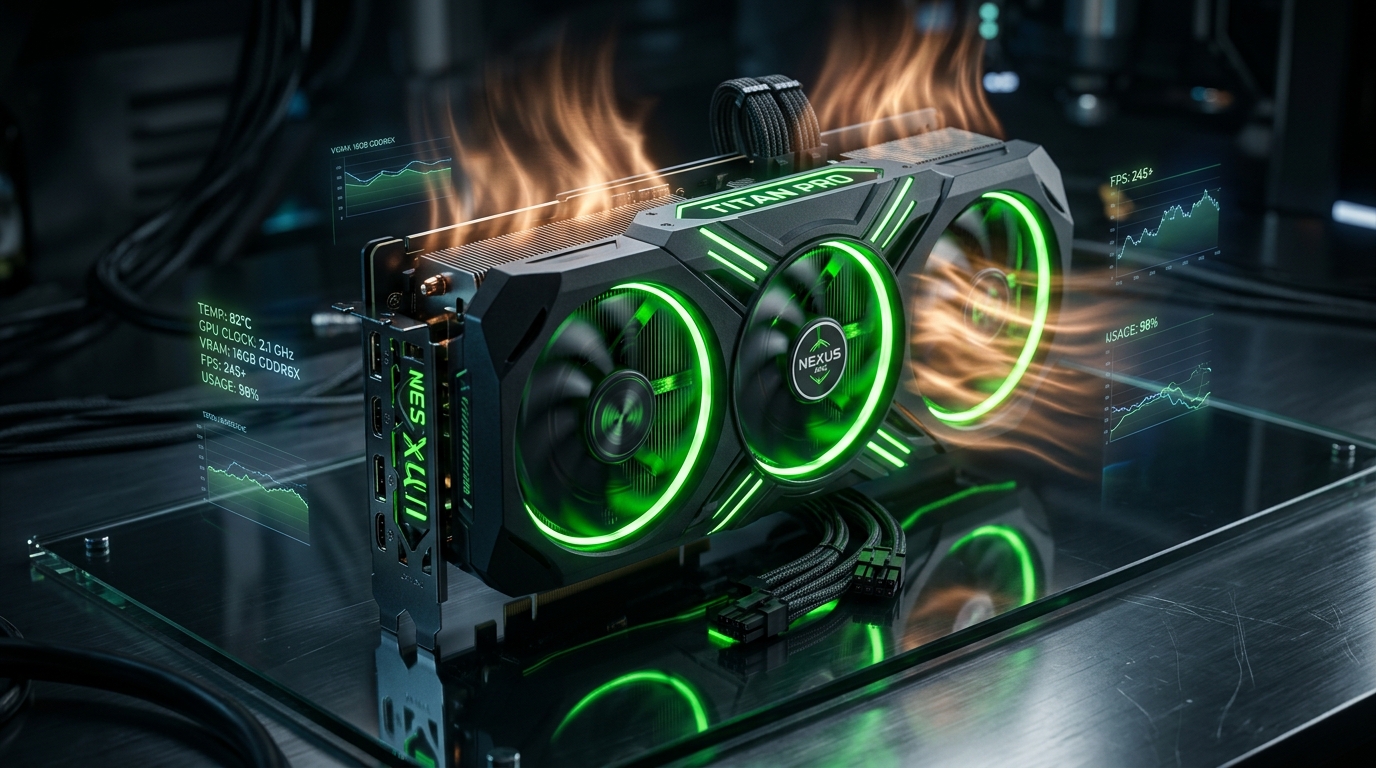
NVIDIA B300 Blackwell Ultra: 3x Faster AI Training at Lower Power Consumption
NVIDIA unveiled its next-generation Blackwell Ultra B300 GPU at GTC 2026, delivering 3x performance per watt compared to the previous Hopper H100 architecture. The chip is specifically designed for training and running the largest AI models, and it’s expected to dominate the data center AI market through 2027 — continuing NVIDIA’s commanding 80%+ share of AI accelerator revenue.
Architecture Deep Dive
The B300 packs 208 billion transistors built on TSMC’s 3nm process, making it the most complex chip ever manufactured. It features a redesigned Tensor Core engine optimized for the mixture-of-experts architectures that dominate modern AI models, delivering 2.5 petaflops of FP4 inference performance — the key metric for running large language models efficiently.
Memory is where the B300 really shines. Each chip includes 288GB of HBM3e high-bandwidth memory with 12 TB/s bandwidth, up from 80GB on the H100. This means a single B300 can hold a 70B parameter model entirely in memory without splitting across multiple GPUs — a practical breakthrough that simplifies deployment and reduces the inter-chip communication overhead that slows down distributed inference.
NVIDIA also introduced NVLink 6.0, providing 3.6 TB/s chip-to-chip bandwidth for systems that connect multiple B300s. A full DGX B300 server with 8 chips delivers 20 petaflops of AI performance — enough to train a GPT-4 class model in under two weeks, compared to the months it took on H100 clusters just two years ago.
Pricing and Availability
Individual B300 GPUs will be priced around $40,000, with full DGX B300 systems starting at $350,000. While these are premium prices, the 3x performance-per-watt improvement means the total cost of ownership for AI training actually decreases — you need fewer chips and less electricity to achieve the same result. NVIDIA estimates that training a frontier model on B300 hardware costs 60% less than on equivalent H100 infrastructure.
Major cloud providers including AWS, Google Cloud, Azure, and Oracle have already committed to large B300 deployments, with the first cloud instances expected in Q3 2026. The demand is so strong that NVIDIA reportedly has 18 months of advance orders totaling over $100 billion.
Impact on the AI Race
The B300’s efficiency gains matter beyond raw speedf. Better performance per watt directly addresses growing concerns about AI’s environmental footprint. A B300 cluster performing the same work as an H100 cluster consumes one-third the electricity, which translates to proportionally lower carbon emissions and cooling costs. For companies facing pressure to report AI-related energy consumption under new ESG disclosure requirements, more efficient hardware is not just a cost saving — it’s a compliance advantage.
Competitors including AMD with its MI350X and Intel with Gaudi 3 continue to chase NVIDIA, but the B300’s performance lead combined with NVIDIA’s mature CUDA software ecosystem makes switching costs prohibitively high for most enterprise customers. The AI chip market remains NVIDIA’s to lose.
How This Technology Works
The underlying mechanisms of this technology have evolved significantly. Modern implementations leverage advanced algorithms and machine learning patterns to deliver results at scale.
Key Benefits and Use Cases
- Enterprise-level scalability and performance
- Real-world applications across multiple industries
- Cost-effectiveness compared to traditional approaches
- Future-proof architecture for emerging needs
Challenges and Limitations
While promising, current implementations face several hurdles including integration complexity, resource requirements, and the need for specialized expertise. Organizations must carefully evaluate their readiness before implementation.
What’s Next?
The trajectory suggests continued innovation and adoption. Industry experts predict significant advancements in the coming years as technology matures and becomes more accessible to organizations of all sizes.
Conclusion
NVIDIA B300 Blackwell Ultra: 3x Faster AI Training at Lower Power Consumption represents an important milestone in technological evolution. As the landscape continues to shift, staying informed about these developments will be crucial for businesses and professionals alike.