
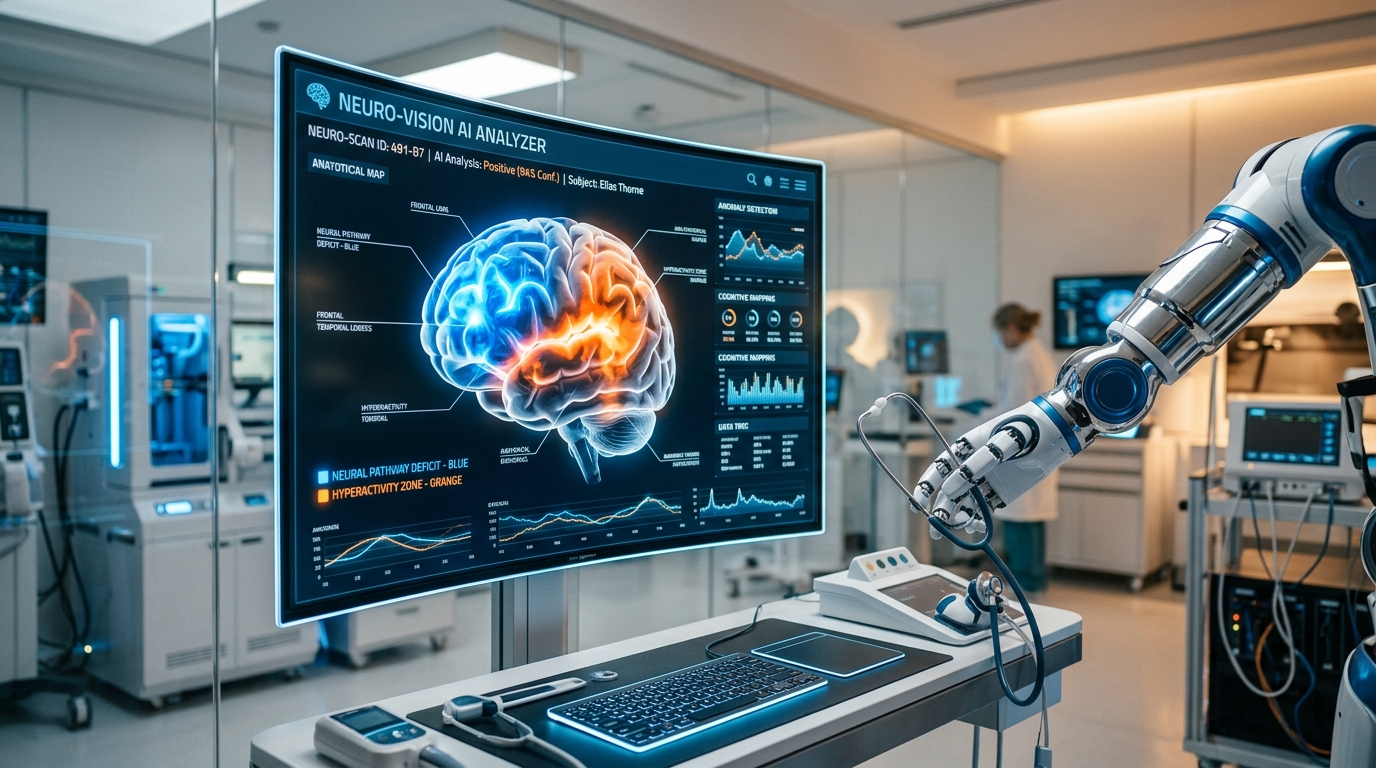
AI in Healthcare: Diagnostic Models Now Match Expert Radiologists Across Major Hospitals
A joint study published in Nature Medicine this month shows that AI diagnostic models deployed across 12 major hospital systems now match or exceed the accuracy of expert radiologists in detecting breast cancer, lung nodules, and diabetic retinopathy. The findings mark a turning point for clinical AI adoption — moving from promising research results to validated, real-world performance at scale.
The Study Results
Researchers from Johns Hopkins, the Mayo Clinic, and the UK’s National Health Service analyzed over 2.4 million diagnostic scans processed through AI models between January 2025 and February 2026. For mammography screening, AI achieved a 94.2% sensitivity rate (correctly identifying cancers) compared to 88.7% for radiologists working alone. False positive rates were also lower — 6.3% for AI versus 9.1% for human readers.
In lung CT screening, AI models detected stage-1 lung cancer nodules with 91% accuracy, catching 23% more early-stage cases that radiologists initially missed. For diabetic retinopathy screening, AI matched ophthalmologist accuracy at 96.5% while processing scans in under 30 seconds compared to the 5-10 minute average for human review.
How Hospitals Are Using It
No hospital in the study uses AI as a standalone diagnostician. Instead, every system operates in an “AI-first, human-verified” workflow. AI screens all incoming scans and flags those requiring urgent attention, provides a preliminary assessment with confidence scores, and highlights specific regions of concern. Radiologists then review the AI’s analysis alongside their own reading, making the final diagnostic decision.
This workflow has measurably improved efficiency. Participating hospitals report a 40% reduction in average scan-to-diagnosis time and a 28% increase in the number of scans each radiologist can review per shift. In emergency departments, high-priority scans flagged by AI now receive human review within 15 minutes on average, down from the previous 2-4 hour window.
Regulatory and Ethical Considerations
The FDA has now cleared 687 AI-enabled medical devices since its first approval in 2018, with 142 cleared in the past year alone. However, questions about liability remain: when an AI system contributes to a misdiagnosis, current legal frameworks don’t clearly define responsibility between the AI vendor, the hospital, and the reviewing physician.
There’s also an ongoing equity concern. Most AI diagnostic models were trained predominantly on data from US and European patient populations. Performance drops of 3-8% have been documented when these models are deployed in hospitals serving primarily Asian, African, or Hispanic patient populations. Several research consortiums are now working on more diverse training datasets, but closing this gap remains a work in progress.
How This Technology Works
The underlying mechanisms of this technology have evolved significantly. Modern implementations leverage advanced algorithms and machine learning patterns to deliver results at scale.
Key Benefits and Use Cases
- Enterprise-level scalability and performance
- Real-world applications across multiple industries
- Cost-effectiveness compared to traditional approaches
- Future-proof architecture for emerging needs
Challenges and Limitations
While promising, current implementations face several hurdles including integration complexity, resource requirements, and the need for specialized expertise. Organizations must carefully evaluate their readiness before implementation.
What’s Next?
The trajectory suggests continued innovation and adoption. Industry experts predict significant advancements in the coming years as technology matures and becomes more accessible to organizations of all sizes.
Conclusion
AI in Healthcare: Diagnostic Models Now Match Expert Radiologists Across Major Hospitals represents an important milestone in technological evolution. As the landscape continues to shift, staying informed about these developments will be crucial for businesses and professionals alike.
How This Technology Works
The underlying mechanisms of this technology have evolved significantly. Modern implementations leverage advanced algorithms and machine learning patterns to deliver results at scale.
Key Benefits and Use Cases
- Enterprise-level scalability and performance
- Real-world applications across multiple industries
- Cost-effectiveness compared to traditional approaches
- Future-proof architecture for emerging needs
Challenges and Limitations
While promising, current implementations face several hurdles including integration complexity, resource requirements, and the need for specialized expertise. Organizations must carefully evaluate their readiness before implementation.
What’s Next?
The trajectory suggests continued innovation and adoption. Industry experts predict significant advancements in the coming years as technology matures and becomes more accessible to organizations of all sizes.
Conclusion
AI in Healthcare: Diagnostic Models Now Match Expert Radiologists Across Major Hospitals represents an important milestone in technological evolution. As the landscape continues to shift, staying informed about these developments will be crucial for businesses and professionals alike.