Wearable Health Devices in 2026: From Fitness Trackers to Early Disease Detection
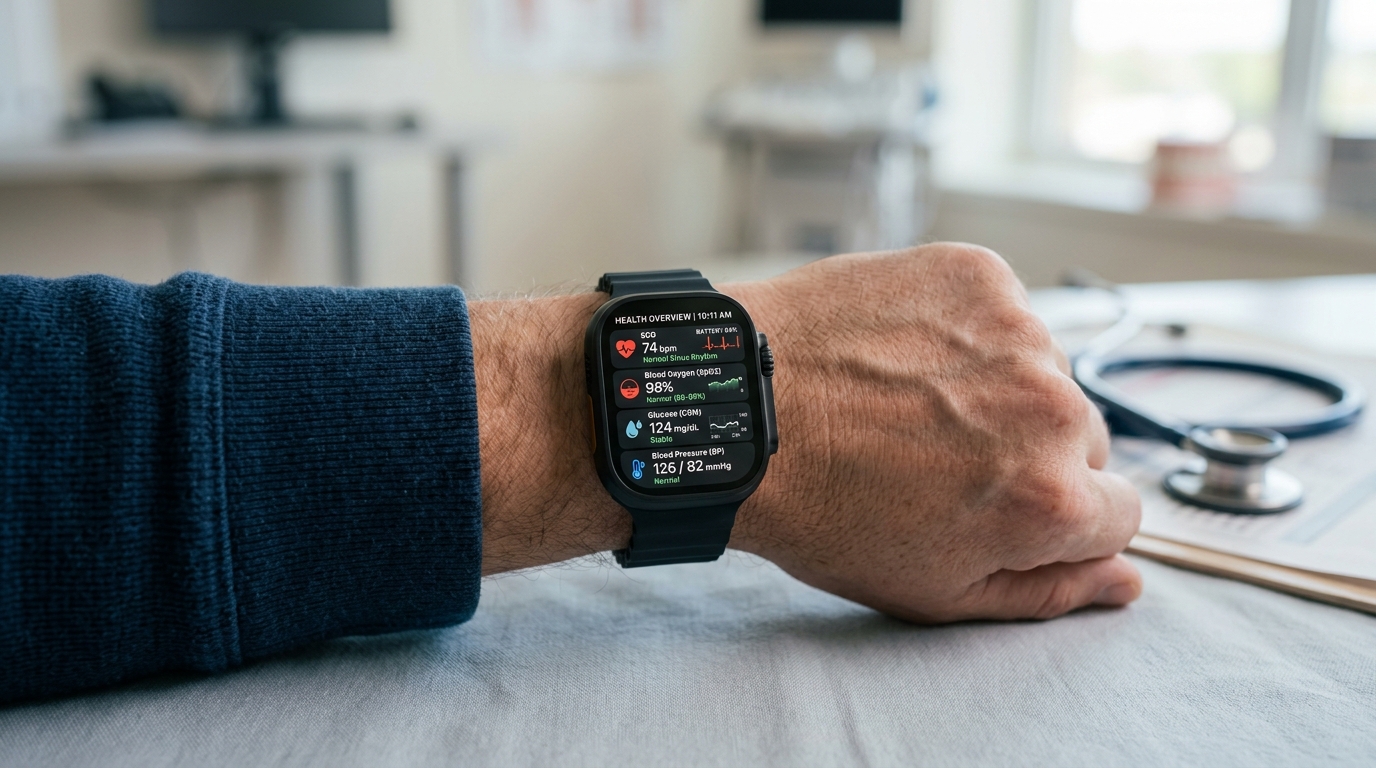
Wearable health devices have crossed the threshold from fitness trackers to genuine medical instruments. The Apple Watch can detect atrial fibrillation and generate FDA-cleared ECG readings. The Samsung Galaxy Ring monitors blood oxygen, skin temperature, and sleep architecture. Continuous glucose monitors from Dexcom and Abbott have moved from diabetic management to mainstream wellness optimization. Oura Ring tracks heart rate variability, respiratory rate, and body temperature with clinical-grade accuracy. And the next generation of wearables — currently in clinical trials — promises non-invasive blood pressure monitoring, early cancer biomarker detection, and real-time stress hormone analysis. The wearable health market is projected to reach $186 billion by 2028, and its impact on preventive medicine is becoming impossible to ignore.
The Medical-Grade Wearable Revolution
The pivotal shift in wearable health technology is the transition from consumer wellness devices (step counters, sleep trackers, calorie estimators) to medical-grade sensors that produce data clinically actionable by healthcare providers. This shift is driven by three converging factors: sensor miniaturization (medical-grade sensors now fit in devices small enough to wear on a wrist or finger), AI-powered analysis (machine learning models can detect subtle patterns in continuous data that human clinicians examining periodic measurements would miss), and regulatory evolution (the FDA has created new regulatory pathways for software-as-a-medical-device that enable wearable health features without the multi-year approval process of traditional medical devices).
Apple Watch’s ECG feature, first cleared by the FDA in 2018, demonstrated that a consumer wearable could produce a single-lead electrocardiogram accurate enough for clinical use in detecting atrial fibrillation (AFib) — the most common heart arrhythmia, which affects 33 million people globally and significantly increases stroke risk. The impact has been substantial: multiple clinical studies have documented cases where Apple Watch AFib alerts led to diagnosis and treatment of previously undetected heart conditions, including cases where early detection prevented strokes.
The Apple Watch Series 10 and Ultra 2 added blood oxygen monitoring (SpO2), wrist temperature sensing (for cycle tracking and illness detection), and crash detection that can automatically call emergency services after detecting a car accident or hard fall. Samsung Galaxy Watch 7 added FDA-cleared electrodermal activity (EDA) measurement for stress monitoring and irregular heart rhythm notifications. Google Pixel Watch 3 includes continuous heart rate monitoring, skin temperature measurement, and integration with Fitbit’s sleep analysis algorithms.
The clinical accuracy of these devices has been independently validated. A 2025 meta-analysis published in The Lancet Digital Health reviewed 47 clinical studies of consumer wearable devices and found that heart rate monitoring accuracy was within 3% of clinical reference standards, SpO2 accuracy was within 2% at rest, and AFib detection sensitivity exceeded 95% with specificity above 95%. These accuracy figures meet or approach the performance of dedicated clinical monitoring equipment, validating the use of consumer wearables for health screening and monitoring outside clinical settings.
Continuous Glucose Monitoring Goes Mainstream
Continuous glucose monitors (CGMs) — small patches worn on the arm or abdomen that measure interstitial glucose levels every 1-5 minutes — have been standard equipment for Type 1 diabetics for years. The mainstream shift is the adoption of CGMs by non-diabetic consumers interested in optimizing their metabolic health, understanding how different foods affect their blood sugar, and preventing the gradual insulin resistance that leads to Type 2 diabetes.
Abbott’s FreeStyle Libre and Dexcom’s G7 are the most widely used CGMs, with combined sales exceeding $10 billion annually. Both provide smartphone-connected glucose data in real-time, showing how meals, exercise, stress, and sleep affect blood sugar levels. For non-diabetic users, the insight is often revelatory: discovering that a particular breakfast causes a glucose spike that explains the mid-morning energy crash, or that a post-dinner walk dramatically smooths the glucose curve after a carb-heavy meal.
The non-diabetic CGM market is served by companies including Levels, Nutrisense, and January AI, which combine CGM hardware with AI-powered analysis and coaching. These services provide personalized metabolic insight: instead of generic dietary guidelines, users see exactly how their individual body responds to specific foods, exercise patterns, and sleep schedules. The evidence base for CGM-guided lifestyle intervention in non-diabetics is still developing (with some endocrinologists questioning the clinical value for people with normal glucose regulation), but the consumer demand for metabolic visibility is clearly strong.
Next-generation CGMs are moving toward true non-invasive measurement. Current CGMs require a small needle inserted under the skin, which must be replaced every 10-14 days. Multiple companies are developing optical CGMs that measure glucose through light-based sensors worn on the wrist — no needles, no patches. Apple is widely reported to be developing a non-invasive glucose monitoring feature for a future Apple Watch, using photonic crystal technology. The technical challenges are significant (interstitial glucose measurement through skin is noisier than subcutaneous measurement), but if the accuracy can be validated clinically, non-invasive wrist-worn glucose monitoring would reach billions of consumers who would never use a needle-based CGM.
Sleep Technology Matures
Sleep tracking has evolved from basic movement-based sleep estimation (the approach used by early Fitbits) to sophisticated multi-sensor sleep staging that accurately identifies light sleep, deep sleep, REM sleep, and wakefulness throughout the night. Oura Ring, widely regarded as the most accurate consumer sleep tracker, achieves 79% epoch-by-epoch agreement with polysomnography (the clinical gold standard for sleep studies) — comparable to the performance of clinical actigraphy devices used in sleep medicine research.
The clinical value of consumer sleep tracking lies in longitudinal data. A single night’s sleep study in a clinical lab provides a snapshot; months of continuous home sleep tracking reveal patterns, trends, and correlations that periodic clinical assessment cannot capture. Clinicians are increasingly incorporating wearable sleep data into their evaluation of patients with insomnia, sleep apnea, circadian rhythm disorders, and mental health conditions where sleep disruption is both a symptom and an aggravating factor.
Smart mattress systems from Eight Sleep and Sleep Number add environmental sleep optimization to tracking. Eight Sleep’s Pod adjusts mattress temperature throughout the night based on sleep stage detection, cooling the bed during deep sleep (when core body temperature naturally drops) and warming it during morning wake-up. Sleep Number’s proprietary SleepIQ technology uses bed-sensor-based heart rate and breathing detection that can identify sleep apnea episodes and recommend clinical evaluation. These systems blend passive monitoring with active environmental optimization, using the data they collect to improve the sleep they’re measuring.
Mental Health Monitoring
Wearable devices are beginning to provide objective metrics for mental health states that have traditionally been assessed only through subjective self-report. Heart rate variability (HRV) — the variation in time intervals between heartbeats — correlates with autonomic nervous system balance and has been validated as a biomarker for stress, anxiety, and depression. Low HRV is associated with chronic stress, burnout, and poor mental health outcomes; high HRV is associated with resilience, recovery, and positive emotional states.
Wearables including Oura Ring, Apple Watch, Garmin, and WHOOP continuously track HRV and present it as a component of daily readiness or recovery scores. The longitudinal HRV trend — not individual readings, which vary significantly — provides an objective measure of stress accumulation and recovery that users can correlate with life events, work patterns, and interventions. Clinicians treating anxiety and depression increasingly reference wearable HRV data alongside traditional symptom assessments.
Electrodermal activity (EDA) measurement — monitoring skin conductance changes associated with sympathetic nervous system activation — provides another objective stress biomarker available in some wearables (Samsung Galaxy Watch, Fitbit Sense). EDA reflects the body’s physiological stress response independently of conscious awareness, meaning wearable EDA monitoring can detect stress that the wearer doesn’t consciously recognize — a valuable signal for people who have normalized chronic stress or who have difficulty recognizing their own stress symptoms.
The combination of HRV, EDA, sleep quality, activity levels, and skin temperature creates a multi-dimensional picture of physiological and mental health state that is far richer than any single metric. AI models trained on this multi-sensor data are being developed to detect early warning signs of depression episodes, anxiety exacerbation, and burnout before they become clinically severe — enabling proactive intervention rather than reactive treatment.
Early Disease Detection: The Next Frontier
The most ambitious application of wearable health technology is early disease detection — identifying illness before symptoms appear based on subtle changes in continuously monitored biomarkers. COVID-19 was the first large-scale demonstration of this potential: studies at Stanford, Scripps Research, and other institutions found that wearables could detect COVID-19 infection up to nine days before symptom onset based on changes in resting heart rate, HRV, skin temperature, and respiratory rate. The DETECT study enrolled over 40,000 participants and demonstrated that wearable-based illness detection had acceptable sensitivity and specificity for flagging infection.
Respiratory disease detection using wearable data (cough analysis from smartwatch microphones, respiratory rate from chest-worn sensors, SpO2 changes from wrist-based pulse oximetry) is being developed for chronic conditions including COPD, asthma, and pneumonia. The goal is continuous monitoring that detects exacerbations early enough for intervention to prevent hospitalization — a significant potential benefit given that COPD hospitalizations cost the US healthcare system $32 billion annually.
Cancer biomarker detection through wearables is at the research stage but represents the most transformative potential application. Several research groups are developing wearable biosensors that can detect circulating tumor DNA (ctDNA), protein biomarkers, and metabolic signatures associated with early-stage cancers through sweat or interstitial fluid analysis. The technology is years from clinical deployment, but if validated, wearable-based cancer screening could enable detection at stages where survival rates are dramatically higher — detecting pancreatic cancer at Stage 1 (survival rate: 80%) rather than Stage 4 (survival rate: 3%).
Privacy and Data Governance
Wearable health data presents acute privacy challenges. The data is deeply personal — heart rhythms, sleep patterns, glucose levels, stress indicators, menstrual cycles, and exercise habits paint an intimate picture of a person’s physical and mental health. This data has commercial value (to insurance companies, employers, advertisers, and data brokers) and legal implications (health data has been subpoenaed in court cases and requested by law enforcement).
In the US, wearable health data generated by consumer devices falls outside the protections of HIPAA (which only covers data generated by healthcare providers and health plans). This means that companies like Fitbit (Google), Apple, Oura, and WHOOP are governed by their own privacy policies and by general consumer protection law, not by healthcare-specific privacy regulations. Google’s acquisition of Fitbit raised particular concerns about combining fitness data with Google’s advertising profile, though Google committed to FTC-mandated restrictions on using Fitbit data for advertising.
The EU’s GDPR classifies health data as a “special category” requiring explicit consent for processing, providing stronger protections for European users. Some US states (California, Virginia, Colorado) have enacted consumer privacy laws that include health data protections, but the federal landscape remains fragmented. The growing sensitivity and specificity of wearable health data — moving from step counts to disease detection — makes comprehensive regulation increasingly urgent. Data that can indicate whether you have a heart condition, are developing diabetes, or are experiencing depression is qualitatively different from data about how many steps you walked today, and the regulatory framework should reflect that distinction.
Related articles: Fintech Super Apps Dominate Emerging Mar | Neuromorphic Computing: Brain-Inspired C | 3D Bioprinting in 2026: From Lab Curiosi