
PlayStation 6 Specs Leak: RDNA 5, 60+ Teraflops, and a 2027 Launch Window
Leaked PlayStation 6 specifications from a credible supply chain source suggest Sony’s next-generation console is further along in development than previously thought, with a launch window pointing to late 2027 or early 2028. The specs describe a system built around a custom AMD chipset with RDNA 5 graphics, hardware-accelerated AI upscaling, and a strong focus on SSD performance that goes beyond even the PS5’s already-impressive storage system.
Reported Hardware Specifications
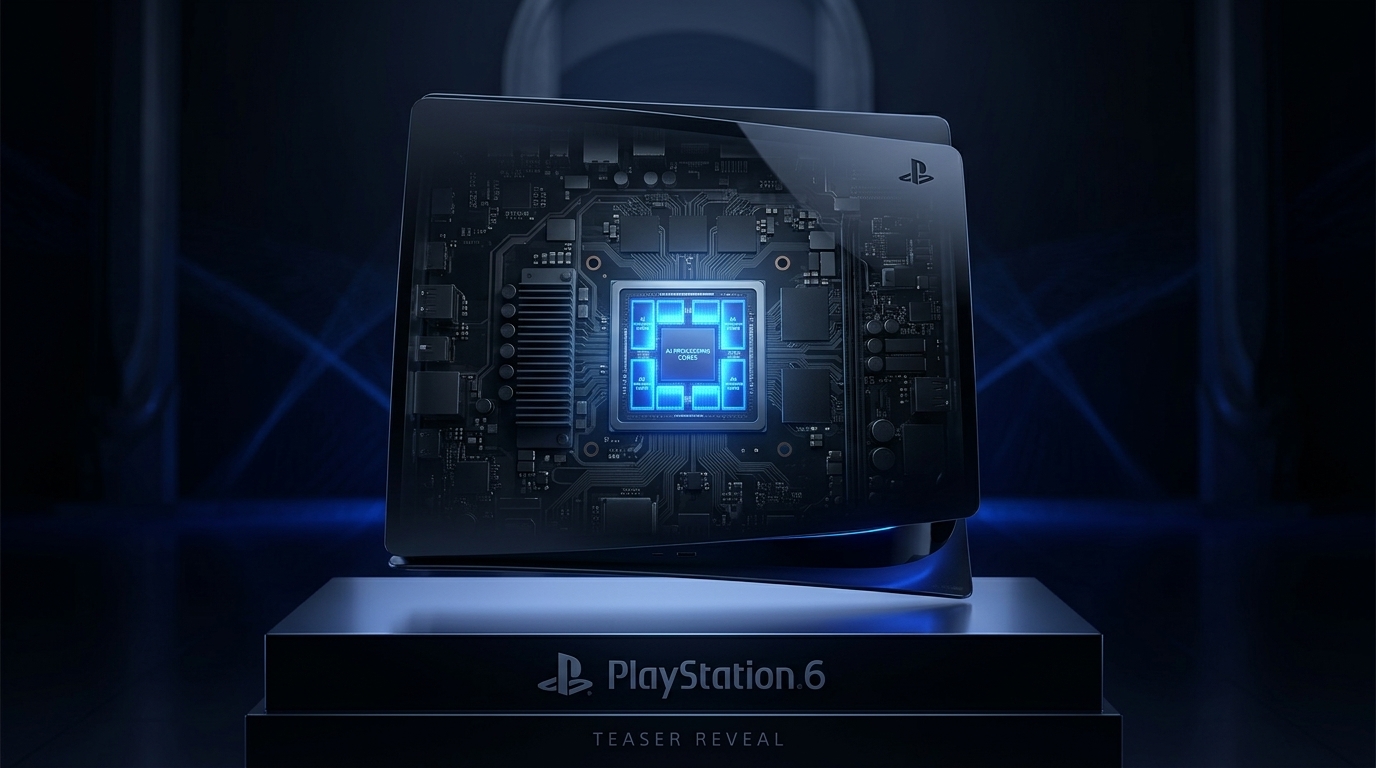
The leaked documents describe a custom AMD APU combining Zen 6 CPU cores with RDNA 5 GPU compute units, fabricated on TSMC’s 2nm process. GPU performance is reportedly targeting 60+ teraflops — roughly 3x the PS5 Pro’s 33.5 teraflops and placing it in the range of current high-end PC GPUs. The chip includes dedicated machine learning accelerators that Sony internally calls “PSSR 2.0” (PlayStation Spectral Super Resolution 2.0), designed to upscale games from native 1440p or lower to 8K output with quality that rivals native rendering.
Memory is listed as 32GB of GDDR7 at 40 GB/s bandwidth — double the PS5’s 16GB GDDR6. Storage uses a custom 2TB NVMe SSD with 15 GB/s read speeds (vs 5.5 GB/s on PS5), with a new “Hyper Stream” architecture that can load entire game levels in under one second. Sony appears to be betting that instant loading isn’t just a convenience feature but a game design enabler — allowing developers to create seamless open worlds without any loading screens, even when transitioning between dramatically different environments.
Backward Compatibility
The documents confirm full backward compatibility with PS5 games and “legacy mode” support for PS4 titles. Sony has apparently been working on a broader backward compatibility solution codenamed “Heritage” that could extend support to PS3 and older titles through a combination of hardware emulation and cloud streaming — though this feature is marked as “launch window target, not confirmed.”
What It Means for Gaming
If accurate, the PS6 would represent the largest generational leap in raw GPU power since the PS2 to PS3 transition. RDNA 5 graphics with 60+ teraflops of performance would enable fully path-traced lighting in all games (not just select titles), photorealistic character rendering comparable to what Unreal Engine 6 previewed at GDC, and AI-driven features like real-time NPC behavior, procedural content generation, and voice synthesis that require dedicated ML hardware.
The 2nm manufacturing process is critical. Smaller transistors mean more performance per watt, which means Sony can pack more computational power into a console form factor without the noise, heat, and power consumption issues that plague high-end gaming PCs. A console that matches an RTX 5080 in a quiet, $599 box would be a compelling proposition for the 50+ million gamers who upgrade with each PlayStation generation.
Pricing and Market Strategy
No pricing has leaked, but industry analysts expect a base model at $499-$549 with a disc-less digital edition at $449-$499 — following the pricing template established by PS5. Sony is reportedly considering a “PS6 Pro” day-one SKU at $699 with additional GPU compute units and 4TB storage, learning from the mid-generation PS5 Pro that cannibalized standard PS5 sales at a higher margin.
Related articles: Fintech Super Apps Dominate Emerging Mar | Neuromorphic Computing: Brain-Inspired C | 3D Bioprinting in 2026: From Lab Curiosi
Key Aspects
This topic encompasses multiple important dimensions that affect businesses and individuals alike. Understanding each aspect provides valuable perspective on the broader implications.
Market Impact
- Growing adoption across industries
- Significant investment and innovation
- Competitive advantages for early adopters
- New business opportunities emerging
Challenges and Considerations
Implementation requires addressing multiple challenges including technical complexity, organizational readiness, and skill requirements. Success requires commitment to both planning and execution.
Success Factors
Organizations that succeed typically combine strong leadership, adequate resource allocation, clear objectives, and iterative improvement. They also maintain focus on measurable outcomes and ROI.
Looking Ahead
As this technology matures and becomes more mainstream, new opportunities and challenges will emerge. Staying informed and proactive positions organizations for success.
Practical Next Steps
Start by assessing your current position, identifying quick wins, and building momentum. Use early successes to secure support for broader initiatives and organizational change.