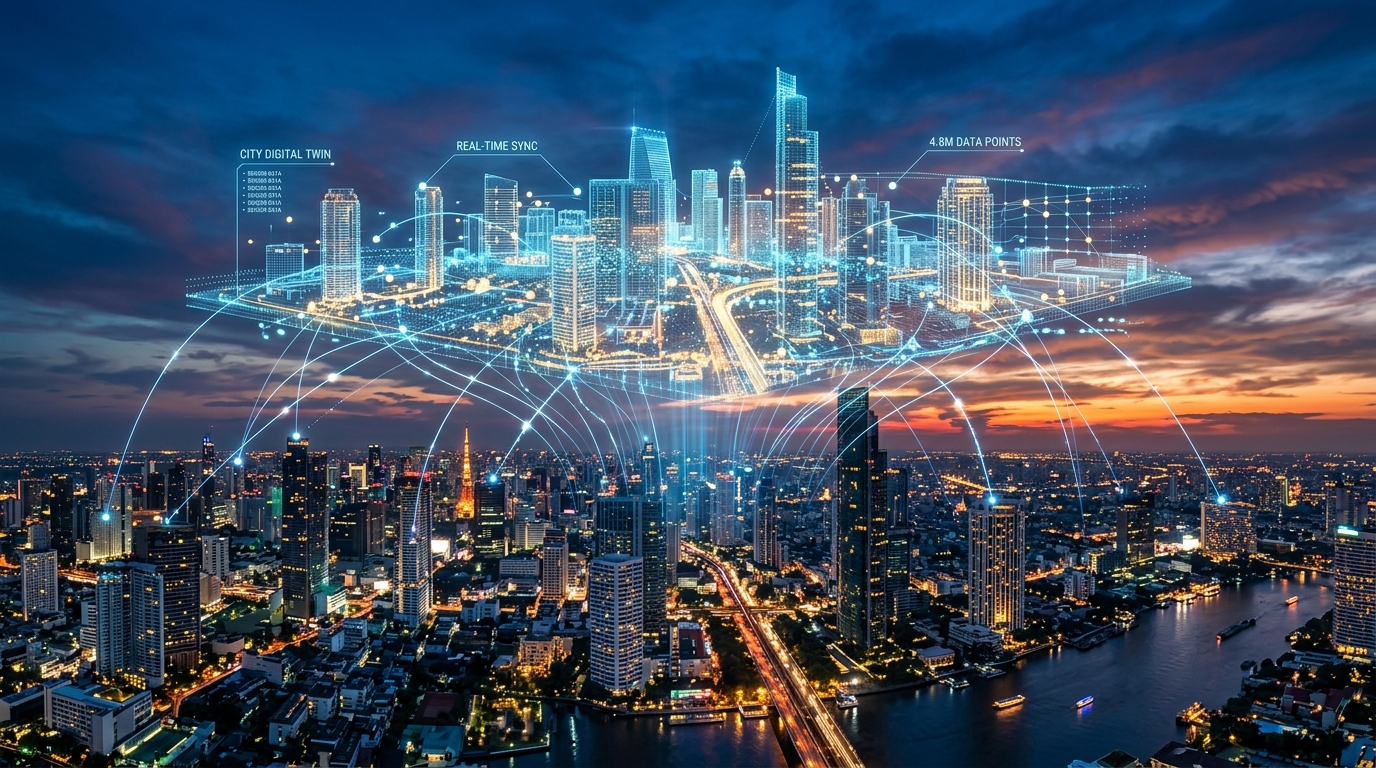
Digital Twins Go Mainstream: AI-Powered Virtual Replicas Transform Every Industry
The concept of a digital twin — a real-time virtual replica of a physical object, process, or system — has evolved from a manufacturing niche into a transformative technology deployed across urban planning, healthcare, energy grids, supply chains, and climate science. In 2026, the digital twin market is projected to reach $110 billion, growing at 35% annually as AI, IoT sensors, and cloud computing make it practical to create accurate virtual copies of increasingly complex real-world systems.
What Digital Twins Look Like Today
A digital twin of a jet engine receives live data from hundreds of sensors monitoring temperature, vibration, pressure, and fuel flow. The virtual engine runs the same physics simulations as the real one, predicting when components will degrade and recommending maintenance before failures occur. Rolls-Royce uses this approach across its entire commercial engine fleet, reducing unplanned downtime by 40% and extending engine life by an average of 18 months.
Singapore’s digital twin of the entire city-state — called Virtual Singapore — integrates building information models, traffic data, weather patterns, cellular network usage, and energy consumption into a single interactive 3D model. Urban planners use it to simulate the impact of new construction on wind patterns, shadows, pedestrian flow, and emergency evacuation routes before a single brick is laid.
In healthcare, patient digital twins are emerging as a frontier application. Siemens Healthineers has created cardiac digital twins from MRI and CT scan data that simulate individual patients’ heart function, allowing cardiologists to test interventions virtually before performing them. In clinical trials, digital twins of enrolled patients (generated from their baseline health data) serve as synthetic control groups, potentially reducing the number of human subjects needed while improving statistical power.
AI Makes Digital Twins Smarter
The integration of AI with digital twin technology is what’s driving the current growth surge. Traditional digital twins were physics-based simulations — accurate but slow to compute and limited to well-understood physical processes. AI-enhanced digital twins combine physics models with machine learning trained on real operational data, capturing complex behaviors and relationships that physics equations alone miss.
An AI-powered digital twin of an offshore wind farm doesn’t just simulate how wind turbines behave in different weather conditions — it learns subtle patterns in maintenance data, power output variations, and component aging that pure physics models can’t predict. The result is more accurate performance forecasting, better maintenance scheduling, and 5-10% higher energy output from the same physical infrastructure.
Challenges and Future Direction
Building and maintaining digital twins requires massive data infrastructure. The IoT sensor networks feeding data to digital twins generate terabytes daily for a single facility. Processing this data in real-time requires edge computing at the sensor level and powerful cloud resources for the simulation backbone. Cybersecurity is a growing concern — a digital twin that accurately represents a power grid, factory, or city is also a detailed blueprint that adversaries could exploit.
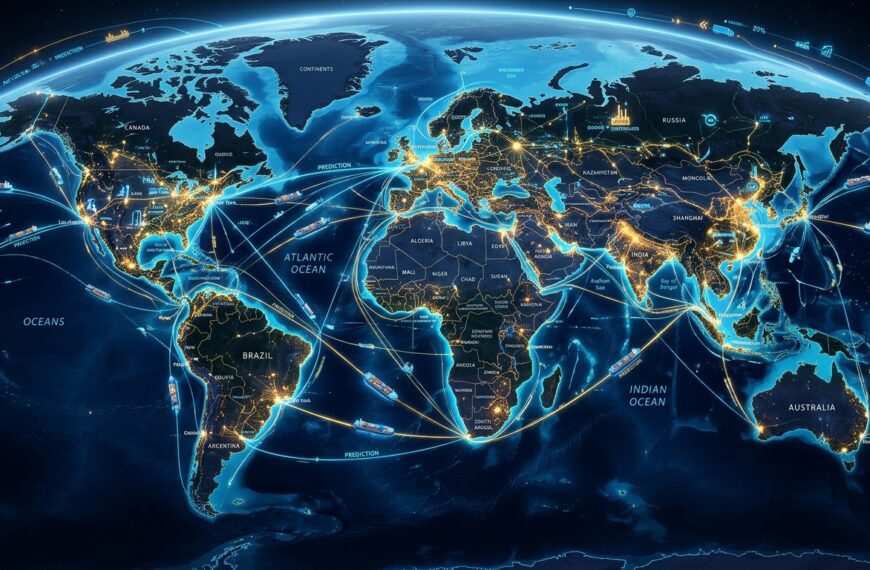
Interoperability remains another challenge. Digital twin platforms from Siemens, Microsoft, AWS, NVIDIA (Omniverse), and others use different data formats, APIs, and simulation engines. An industry push toward open standards (led by the Digital Twin Consortium) aims to allow digital twins from different vendors to communicate — essential for composite twins that model entire supply chains or city systems spanning multiple platforms.
How This Technology Works
The underlying mechanisms of this technology have evolved significantly. Modern implementations leverage advanced algorithms and machine learning patterns to deliver results at scale.
Key Benefits and Use Cases
- Enterprise-level scalability and performance
- Real-world applications across multiple industries
- Cost-effectiveness compared to traditional approaches
- Future-proof architecture for emerging needs
Challenges and Limitations
While promising, current implementations face several hurdles including integration complexity, resource requirements, and the need for specialized expertise. Organizations must carefully evaluate their readiness before implementation.
What’s Next?
The trajectory suggests continued innovation and adoption. Industry experts predict significant advancements in the coming years as technology matures and becomes more accessible to organizations of all sizes.
Conclusion
Digital Twins Go Mainstream: AI-Powered Virtual Replicas Transform Every Industry represents an important milestone in technological evolution. As the landscape continues to shift, staying informed about these developments will be crucial for businesses and professionals alike.